
24 Dark Bedroom Color Ideas That Feel Cozy, Not Cave-Like
Painting a bedroom dark feels like a dare. You stand there holding a paint chip the color of a thundercloud, and some part of your brain insists the room will end up looking like a basement.
It won’t. Not if you get the light and the layers right.
Dark bedrooms are one of the few decorating moves that often works better in a small room than a big one. The corners blur. The walls stop announcing exactly where they are. The whole space reads deeper than it measures. Add warm lamplight and bedding you want to fall into, and you get a room that feels like an exhale at the end of the day.
Below are 24 ideas, sorted by color family first and then by how you actually apply the color. Real paint names, real undertones, and the practical bits nobody mentions until you have already bought two gallons of the wrong thing.
Quick answer: The most reliable dark bedroom colors are deep navy (Benjamin Moore Hale Navy HC-154), warm charcoal (Sherwin-Williams Iron Ore SW 7069), forest green (Farrow and Ball Studio Green No. 93), and a soft black (Benjamin Moore Onyx 2133-10). Paint all four walls rather than a single accent wall, take the color onto the trim or ceiling if you want the room to feel bigger, and layer in three warm light sources at three different heights. Use a matte or eggshell finish, and live with a large paint sample for two days before you commit.
What Dark Paint Actually Does to a Bedroom
Every paint color has an LRV, or Light Reflectance Value, on a scale from 0 to 100. Pure black sits near 0 and pure white near 100. Anything under about 15 counts as a genuinely dark color, and that is the range most of the colors below live in.
Low LRV means the wall absorbs light instead of bouncing it back. That is the whole trick. Absorbed light means fewer visible shadows, fewer hard edges, and no obvious line where the wall meets the ceiling. Your eye loses track of the room’s boundaries, and a boxy 10 by 11 bedroom stops feeling like a box.
The flip side is that dark paint shows everything. Roller marks, patched drywall, that spot where you filled a nail hole and forgot to sand it. Prep matters more here than with a mid-tone beige, and a tinted primer will save you a coat.
One more thing worth knowing before you start: a single dark accent wall usually makes a room feel smaller, not bigger. It creates a hard contrast line that tells your eye precisely where the wall stops. Four dark walls remove that line entirely. If you are nervous, that feels backwards. It isn’t.
Deep Navy and Blue Black Bedrooms
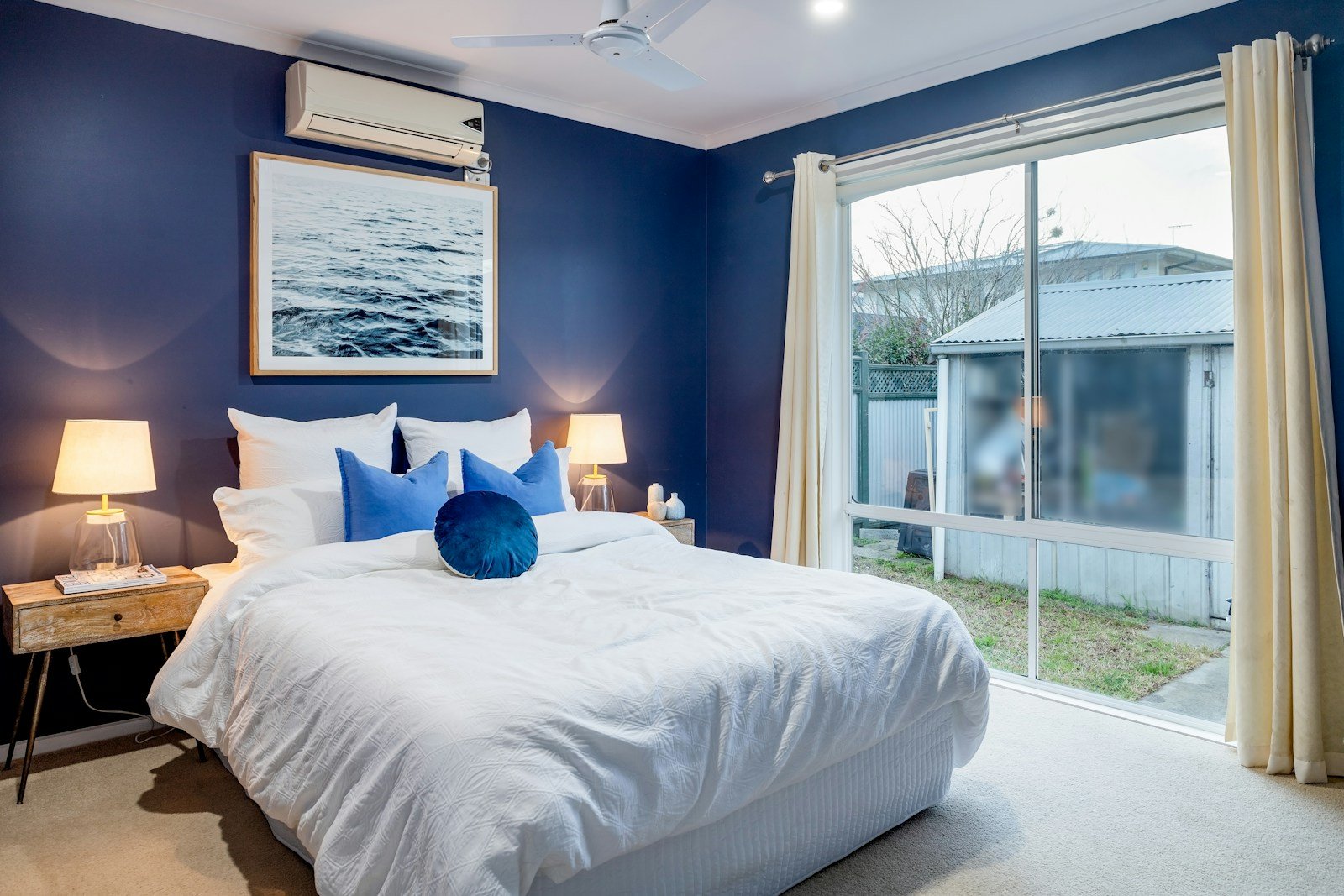
1. Hale Navy on all four walls. Benjamin Moore Hale Navy HC-154 is the navy people mean when they say navy. It has enough gray in it to stay grown up and enough blue to stay obviously blue, with an LRV around 6. In a north-facing room it goes moody and slate-like. In a south-facing room it warms up and reads almost inky. Both are good.
2. Naval with crisp white trim. Sherwin-Williams Naval SW 6244 is a cleaner, more saturated navy than Hale Navy, closer to a classic uniform blue. Leave the trim and door in a bright white and you get that tailored, slightly nautical look without the rope and anchor cliches. Works especially well with brass hardware.
3. Hague Blue in a small room. Farrow and Ball Hague Blue No. 30 is a deep blue with a green undertone, which is what stops it from feeling cold. It is a favorite for small bedrooms and box rooms precisely because the green softens the edges. Pair it with unlacquered brass and warm wood and it stops reading as a color and starts reading as an atmosphere.
4. Go all the way to blue black. Benjamin Moore Gentleman’s Gray 2062-20 and Farrow and Ball Black Blue No. 95 both sit in that territory where you cannot quite tell whether you are looking at navy or black. In daylight it is blue. At night, under lamps, it is essentially black. That shift is the entire appeal, and it makes a bedroom feel very different at 9am and 9pm.
Charcoal, Graphite and True Black
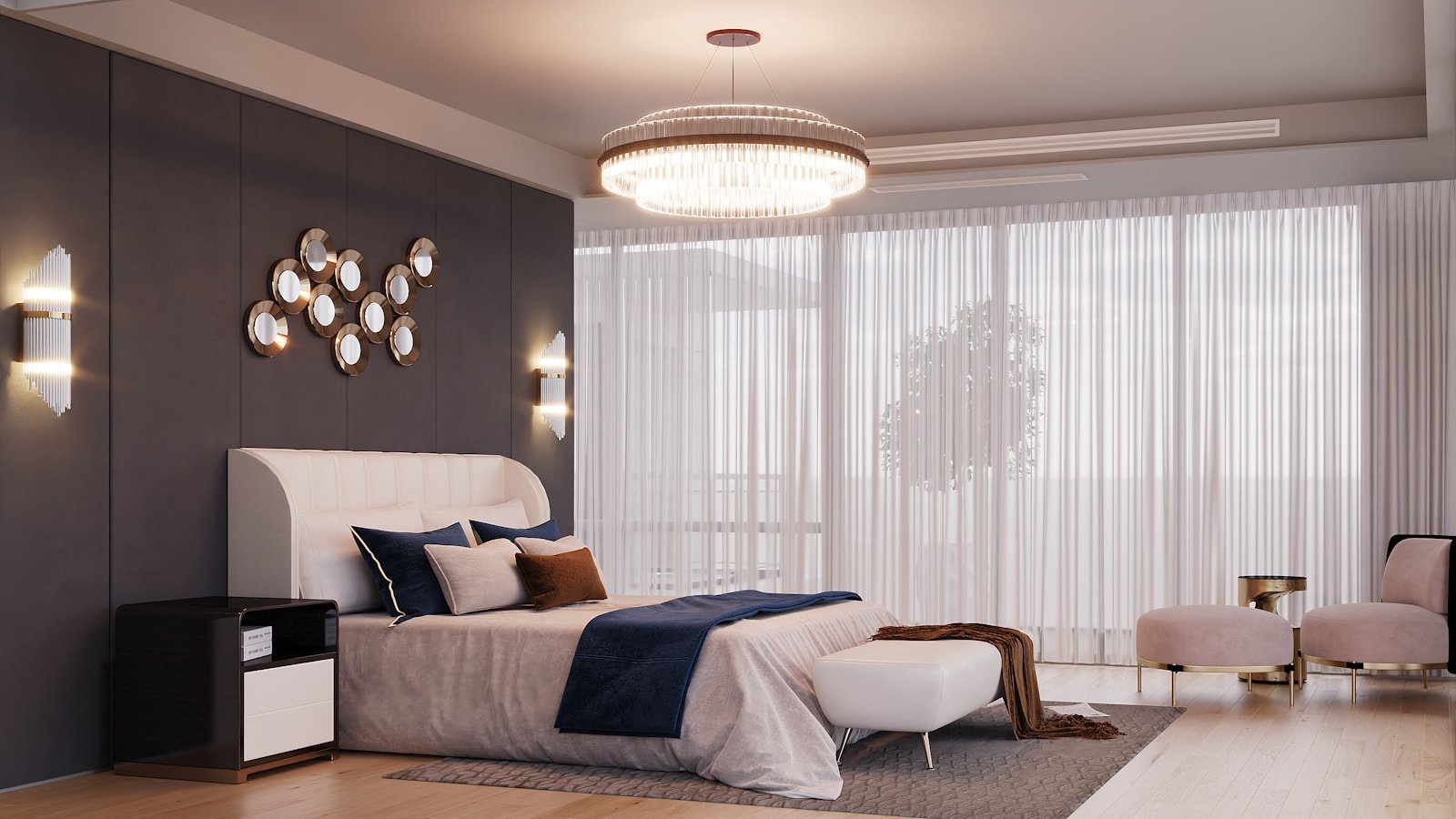
5. Iron Ore for warmth without brown. Sherwin-Williams Iron Ore SW 7069 is the safe entry point into dark. It is a soft black with a warm gray base and an LRV around 6, and it almost never looks harsh. If someone in your household is skeptical about the whole idea, this is the one to show them.
6. Kendall Charcoal if you want to ease in. Benjamin Moore Kendall Charcoal HC-166 has an LRV around 14, which puts it at the light end of dark. You still get depth and drama, but there is enough reflectance left that a room with one modest window does not go gloomy. A good pick for basements and ground-floor bedrooms.
7. Tricorn Black, trim included. Sherwin-Williams Tricorn Black SW 6258 is a true neutral black with almost no undertone, sitting near an LRV of 3. Take it across the walls, the baseboards, the window casing and the door, and the architecture just disappears. What is left is your bed, your art and your lamps, floating. It is a strong look and it is not for everyone, but when it lands, it really lands.
8. Soot when black feels like too much. Benjamin Moore Soot 2129-20 is a black with a blue cast that softens the whole thing considerably. Same drama, less severity. It pairs beautifully with pale oak floors and cream linen, and it photographs far better than a flat true black.
Dark Green Bedrooms, From Forest to Olive
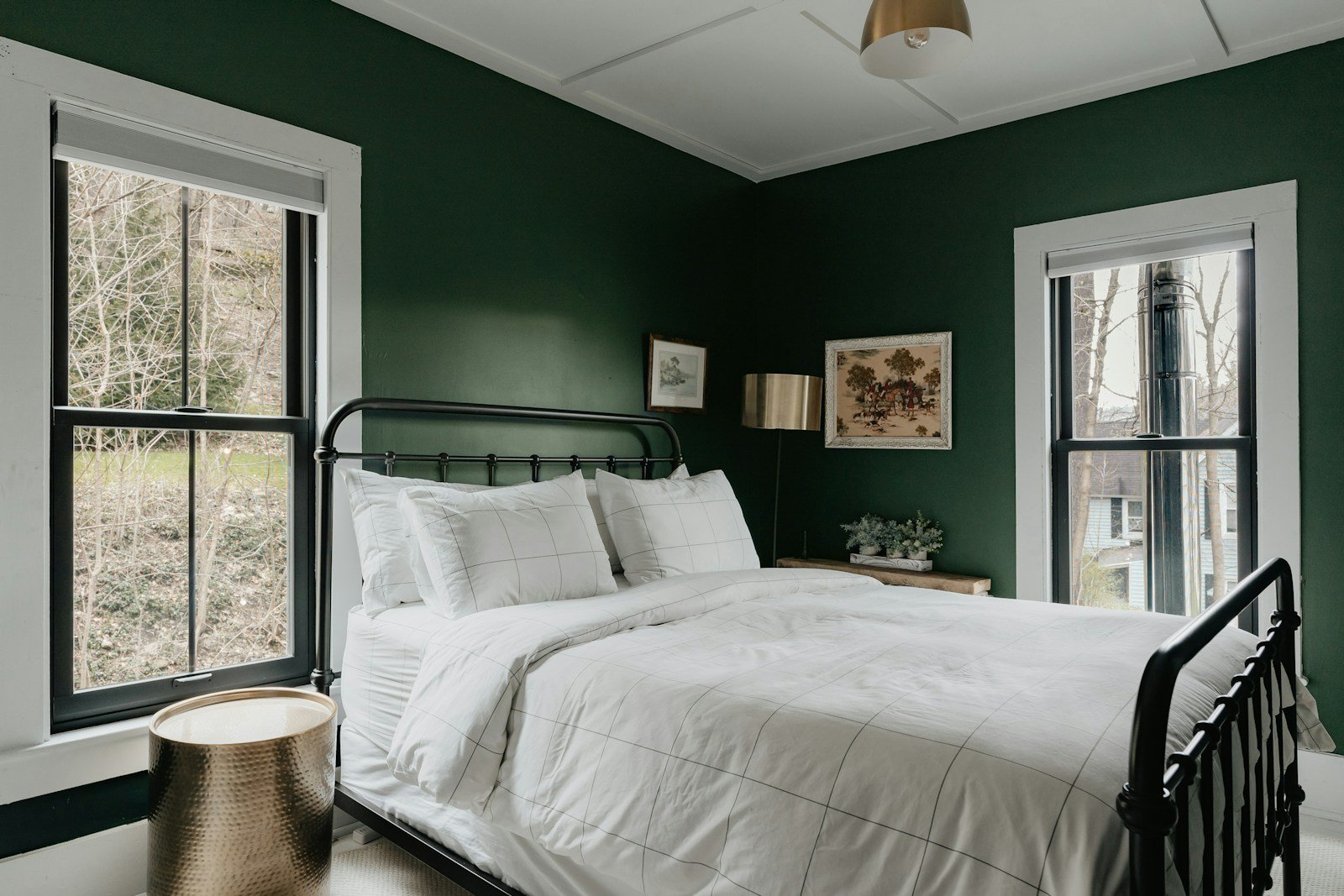
9. Studio Green for that near-black forest look. Farrow and Ball Studio Green No. 93 is so deep it reads black in low light and green only when the sun hits it. If you want a room that feels like the inside of a very good library, this is it. Keep the bedding simple and let the wall do the talking.
10. Black Forest Green for a true deep green. Benjamin Moore Black Forest Green 2047-10 stays more clearly green than Studio Green does. It is the better choice if you actually want people to notice the color rather than just the mood. Gorgeous against warm brass, terracotta pots and anything wicker.
11. Pewter Green as the gentler option. Sherwin-Williams Pewter Green SW 6208 sits around an LRV of 12, so it is dark without being dim. It has a gray-green cast that plays nicely with existing beige carpet, which is a real consideration for a lot of rentals and older houses. For lighter takes on the same family, we have a full roundup of green bedroom ideas across every shade.
12. Bancha for the olive route. Farrow and Ball Bancha No. 298 is a deep olive with a lot of yellow in the base, which makes it read warm rather than cool. Olive is having a long moment and it ages well, because it borrows from natural materials rather than from a trend cycle. Layer it with camel, cream and unfinished wood.
Warm Darks: Brown, Plum and Deep Red
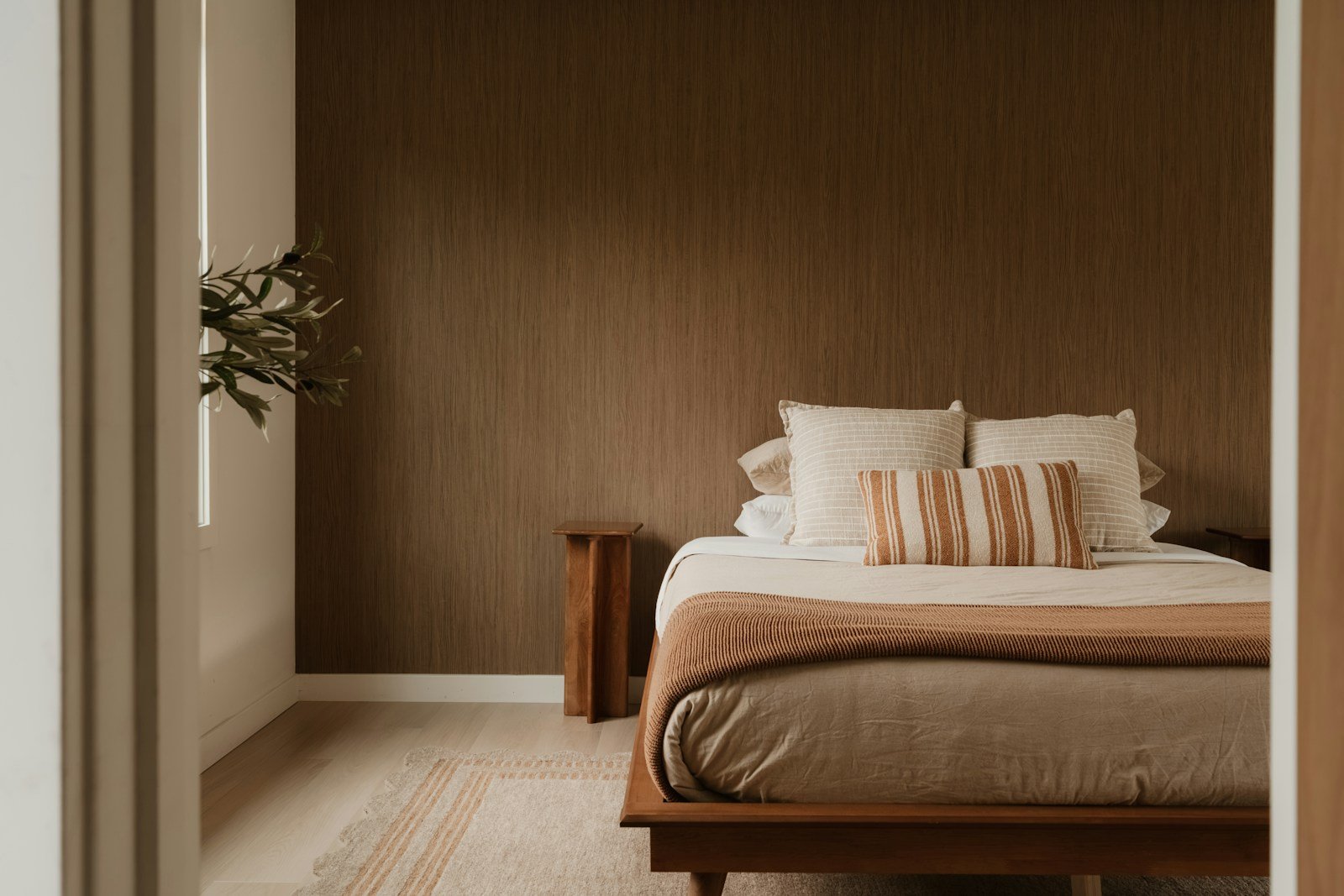
13. Urbane Bronze for a spa-like dark. Sherwin-Williams Urbane Bronze SW 7048 is a warm gray-brown with an LRV around 8. It behaves like a neutral even though it is very dark, so it plays well with almost any flooring, and it does not fight with wood tones the way a cool charcoal can.
14. Tanner’s Brown for genuine chocolate. Farrow and Ball Tanner’s Brown No. 255 is a proper dark brown with a purple base underneath. Brown bedrooms sound dated on paper and look extraordinary in person, especially with cream bedding and a lot of natural texture. This is the color that surprises people.
15. Brinjal for something less expected. Farrow and Ball Brinjal No. 222 is a deep aubergine, dark enough to be almost neutral but with an unmistakable purple heart. It is a bold choice, and it works best when everything else in the room is quiet: white bedding, natural wood, one good lamp.
16. A deep red for a genuinely warm room. Benjamin Moore Caliente AF-290 is a rich, slightly muted red that reads as warmth rather than as noise. In a bedroom with only evening use, a deep red under lamplight is one of the coziest things you can do. Keep textiles neutral so the walls stay the only strong color.
Where to Put the Dark Color
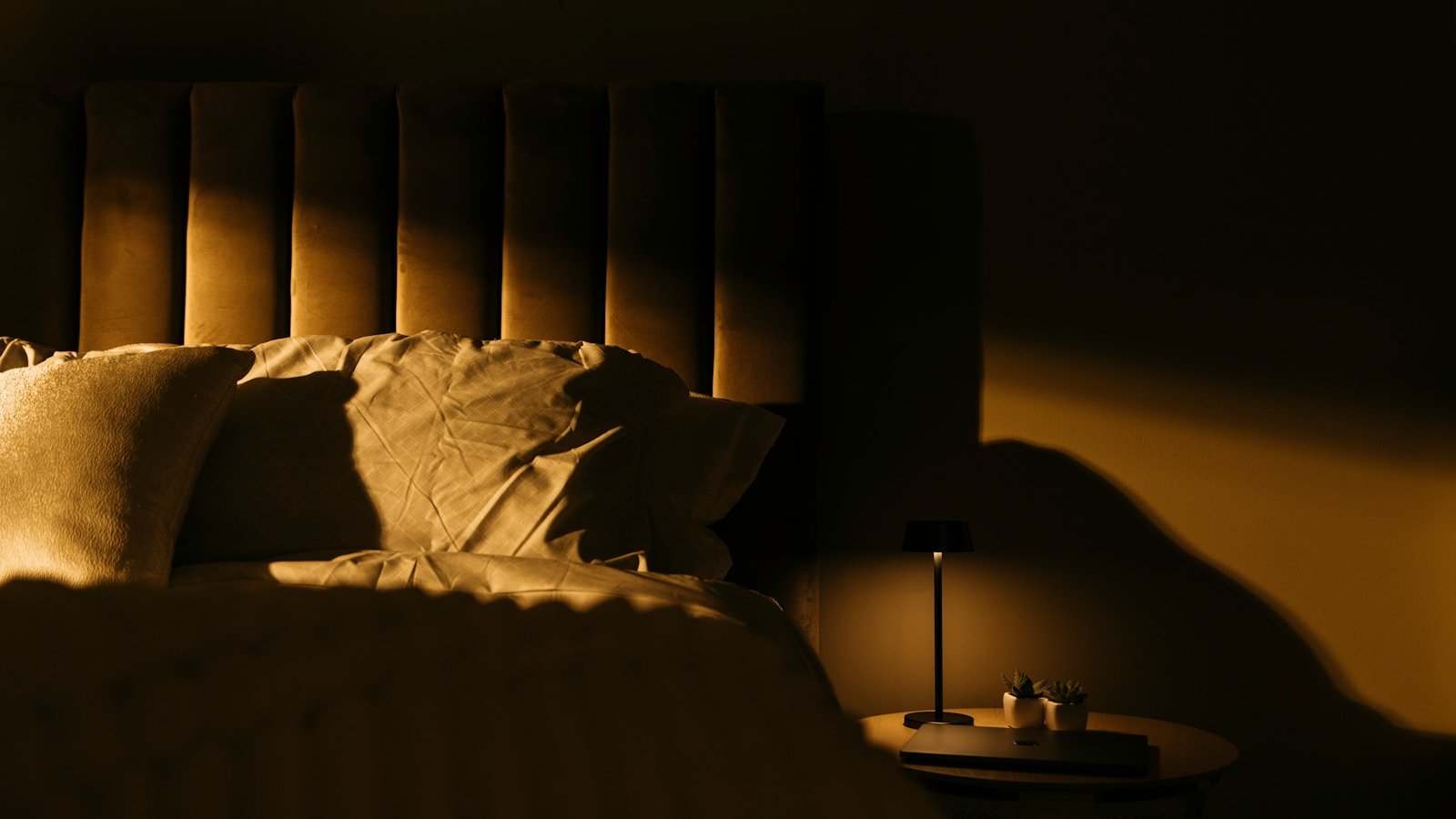
17. Color drench the whole room. Walls, trim, door, radiator cover, all in the same color and the same finish. This is the single most effective way to make a dark bedroom feel intentional rather than accidental. Because nothing interrupts the color, the eye keeps traveling and the room reads larger.
18. Dark ceiling, lighter walls. Flip the usual arrangement. A dark ceiling over mid-tone walls lowers the visual height of a room, which sounds bad until you try it in a bedroom, where a slightly lower ceiling reads as cocooning. Especially good in rooms with tall, awkward proportions.
19. If you must do one wall, do the whole wall. The mistake is painting a rectangle behind the headboard and stopping. Take the color corner to corner, floor to ceiling, and include any trim on that wall. A full plane reads as architecture. A partial one reads as an unfinished project.
20. Paint the inside of something. An alcove, a set of built-in shelves, the back of a wardrobe, the inside of a closet. A small hit of a deep color in a recess gives you depth and a little surprise without repainting the room. It is also the cheapest way to test whether you actually like living with a color.
Layering So It Feels Cozy, Not Cave-Like
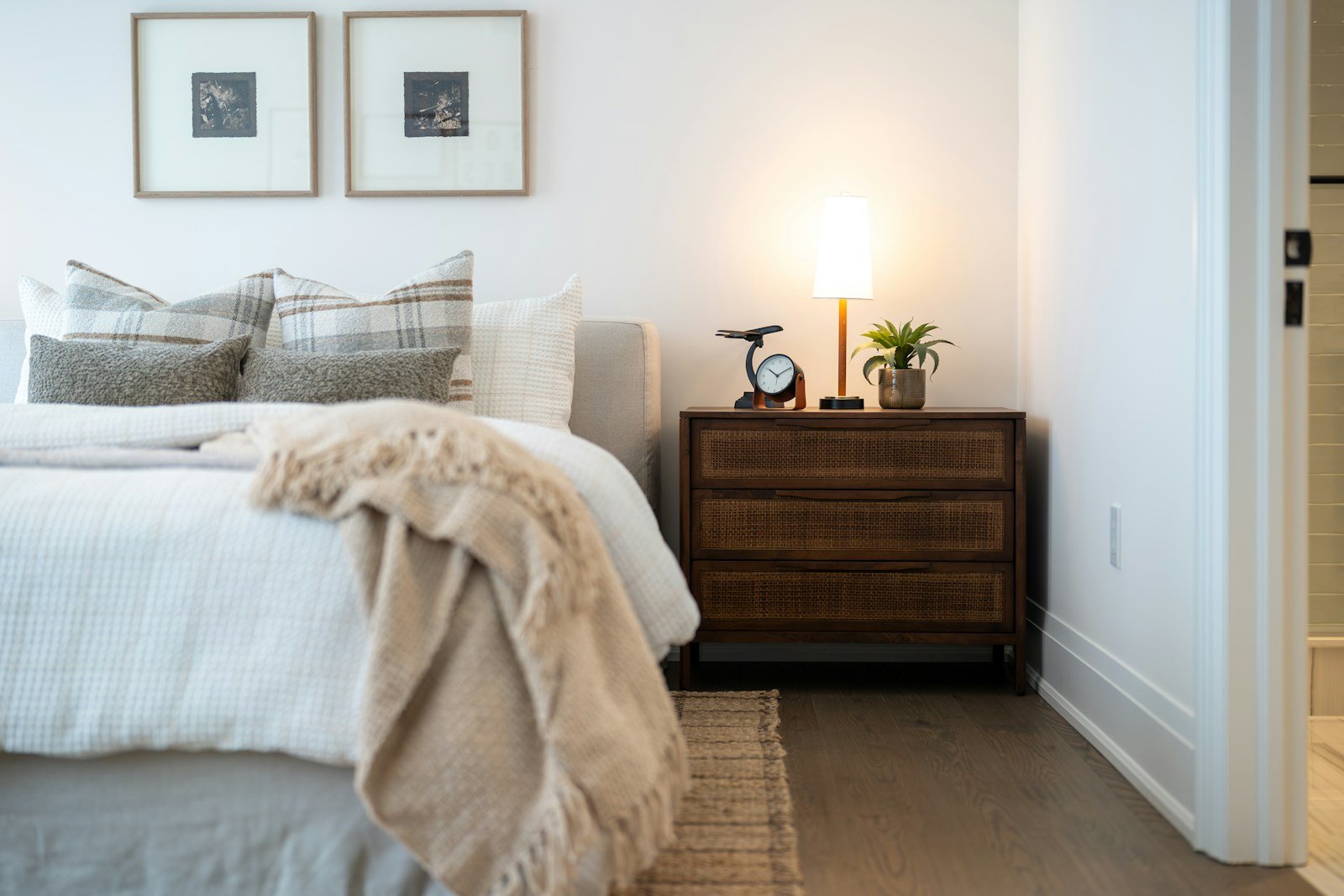
21. Three light sources, three heights. This is the rule that saves dark bedrooms. One low (a bedside lamp), one mid (a wall sconce or a dresser lamp), one higher or ambient (a picture light, a pendant, a floor lamp in the corner). Use 2700K bulbs. Cool white bulbs on dark walls look like a parking garage.
22. Skip the stark white bedding. Bright optical white against a very dark wall creates a contrast so sharp it flattens the room. Cream, oatmeal, bone, warm ivory and washed linen all read soft and expensive against dark paint. If you want white, pick one with a warm base.
23. Texture does the work color usually does. When the walls are one flat, deep tone, texture becomes the interest. Think chunky wool throws, a boucle bench, rattan or cane, aged brass, unlacquered hardware, a jute or vintage rug. Nothing has to be a different color. It just has to feel different.
24. Hang art and mirrors, generously. Dark walls are the best gallery background you will ever get, because the frame edges vanish and the artwork appears to float. A mirror opposite a window does double duty, bouncing daylight back into a room that is otherwise absorbing all of it. For more on building a full scheme around one anchor color, see our guide to bedroom color schemes.
How to Choose Your Dark Bedroom Color
Start with which way the room faces. North-facing rooms get cool, indirect light all day, which pushes gray and blue colors colder and can make them look dingy. Warm darks like Urbane Bronze, Tanner’s Brown or Bancha hold up much better there. South-facing rooms get warm light and can take a cooler navy or charcoal without any trouble.
Then look at the LRV. If your bedroom has one small window, staying in the 10 to 15 range (Kendall Charcoal, Pewter Green) gives you depth without gloom. If you have decent daylight or you mostly use the room at night anyway, you can drop below 8 and enjoy it.
Sample properly, and sample big. A two-inch chip tells you almost nothing about a dark color. Paint a two-foot square directly on the wall, or paint a large piece of poster board and move it around the room. Look at it in morning light, in afternoon light, and under your actual lamps at night. Give it two full days.
Pick your finish for the walls, not the internet. Matte and flat finishes absorb light and hide wall imperfections, which is exactly what you want in a bedroom. Eggshell gives you a little more wipeability if you have kids or pets. Avoid satin and semi-gloss on large dark walls, because the sheen turns every uneven patch into a visible ripple.
Decide about the trim early. Same color as the walls means seamless and larger-feeling. White trim means crisp and traditional. There is no wrong answer, but changing your mind after the first coat means another gallon and another weekend.
Check it against the floor. A cool charcoal over orange-toned oak will fight. A warm bronze or brown over the same floor will not. Bring your paint sample down to floor level and look at them together before you buy. If you are working across multiple rooms, our overview of blue room ideas from navy to coastal covers how the same deep tones behave in different spaces.
Frequently Asked Questions
Do dark colors make a small bedroom look smaller?
No, not when the whole room is painted. Dark walls absorb light and soften the corners, which blurs where the room ends. What does make a small room feel smaller is a single dark accent wall, because the contrast line tells your eye exactly where the boundary sits.
What is the best dark paint color for a bedroom?
Benjamin Moore Hale Navy HC-154 and Sherwin-Williams Iron Ore SW 7069 are the two most reliable choices, because both are dark enough for real drama but carry enough warmth to avoid feeling cold. For green, Farrow and Ball Studio Green No. 93 is the classic. Match the undertone to your room’s light direction and you can hardly go wrong.
Should I paint the ceiling dark too?
If you want the room to feel like one enveloping space, yes. Painting the ceiling the same color removes the horizontal line that makes a room feel boxed in. If your ceiling is already low and you would rather keep some lift, take it one or two shades lighter than the walls instead of jumping to white.
What paint finish works best on dark walls?
Matte or flat for most bedrooms. It absorbs light, hides imperfections and gives dark colors that soft, velvety look. Eggshell is the practical compromise if the walls need occasional cleaning. Stay away from satin and semi-gloss on big wall areas.
How many coats will I need?
Usually two over a gray-tinted primer, sometimes three if you are going over a light color without primer. Ask the paint counter to tint your primer toward the final color. It costs almost nothing and often saves you an entire coat of expensive paint.
What bedding goes with dark walls?
Cream, oatmeal, bone, warm ivory, camel and soft rust all work. Washed linen and cotton percale look better than anything shiny. Avoid bright optical white, which creates a contrast so sharp it flattens the room and makes the paint look cheap.
Do dark bedroom walls actually help you sleep?
There is no paint color that will fix insomnia, but a darker room does reduce the amount of ambient light bouncing around at night, and a lot of people find a low-contrast, low-glare space easier to wind down in. Blackout curtains and warm 2700K bulbs will do more for your sleep than the wall color, so treat the paint as atmosphere rather than as a sleep aid.
One Last Thing Before You Buy the Paint
The people who regret going dark almost always did it halfway. One wall, cool bulbs, bright white bedding, no texture. The result is a room that looks like it is apologizing for itself.
The people who love it committed. Four walls, warm light at three heights, soft bedding, a lot of texture. That version of a dark bedroom does not feel small or heavy. It feels finished, and quiet, and like somewhere you actually want to be at the end of a long day.
Buy a sample pot this weekend. Paint a big square. Look at it Sunday night with the lamps on. You will know.