
22 Outdoor Living Room Ideas for a Comfortable, Collected Patio
An outdoor living room works best when it feels as comfortable and intentional as the rooms inside your home. In 2026, that idea is especially relevant: the U.S. Houzz Outdoor Trends Study found that 83% of renovated outdoor spaces include a lounge or seating area, while 66% of renovated lounge areas include outdoor lighting.
The goal is not to copy your indoor living room outdoors. It is to borrow the parts that make indoor rooms welcoming—good seating, useful surfaces, layered lighting, texture and a clear layout—then choose materials that can handle your climate.
What makes a good outdoor living room?
A comfortable outdoor living room needs four basics: a defined seating zone, weather-appropriate furniture, shade or shelter when possible, and lighting for after sunset. From there, rugs, side tables, textiles, plants and accessories can make the space feel more personal.
1. Build the layout around conversation
Arrange sofas and lounge chairs so people can comfortably face one another instead of lining every piece against the perimeter. A coffee table or pair of smaller tables helps anchor the group and gives everyone somewhere to set a drink.
2. Treat the patio like a real room
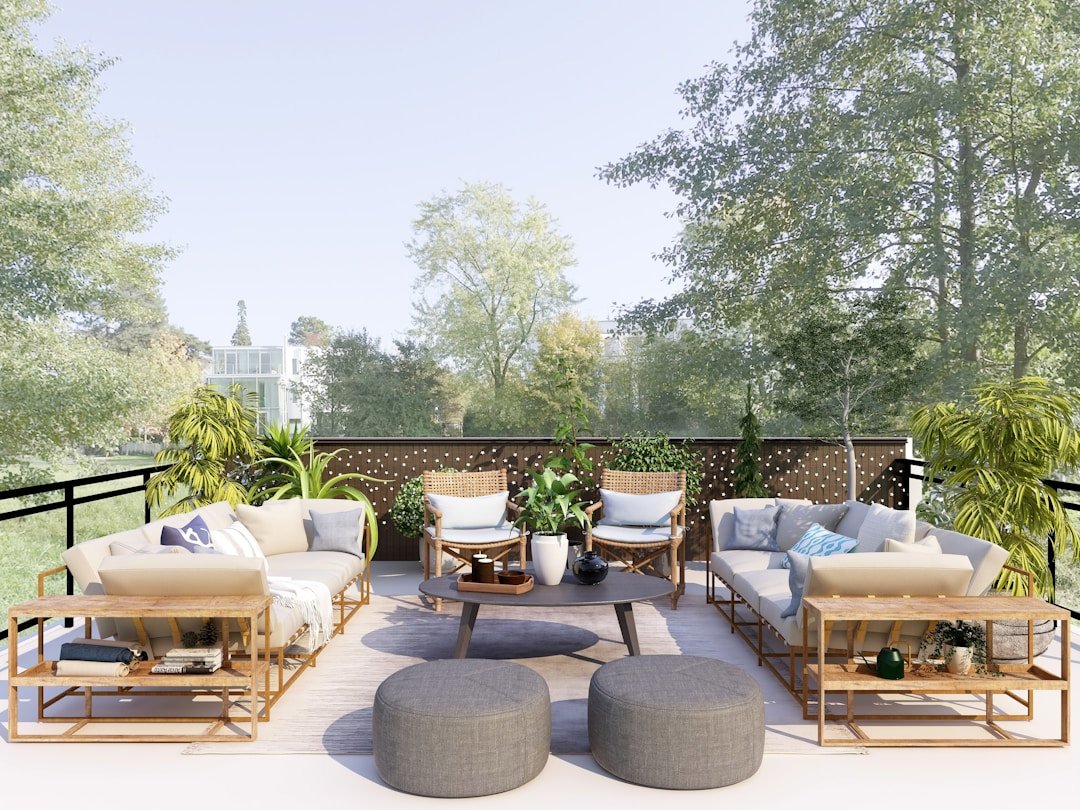
Start with the same questions you would ask indoors: Where is the focal point? How will people move through the space? Which seats need a table within reach? A thoughtful furniture plan keeps even a modest patio from feeling like a collection of unrelated pieces.
3. Add an outdoor rug to define the seating zone
A rug visually connects chairs, sofas and tables, particularly on a large deck or open patio. Choose a rug made for outdoor exposure and size it generously enough that at least the front legs of the main seating pieces can rest on it.
4. Mix seating instead of buying a matching set
A sofa paired with two different lounge chairs often feels more collected than a complete matching suite. Repeat one material or color—such as teak, black metal or warm beige cushions—to keep the combination coherent.
5. Bring in warm wood
Wood softens stone, concrete and metal. Teak and other exterior-suitable woods can introduce the same warmth that walnut and oak bring indoors. Follow the manufacturer’s care instructions because weathering and maintenance vary by species and finish.
6. Use earthy color outside
Terracotta, rust, olive, sand and warm brown sit naturally beside landscaping. For more inspiration on building a grounded palette, see these olive green decor ideas and autumn color palettes.
7. Layer several smaller light sources
Instead of relying on one harsh fixture, combine wall lights, portable outdoor lamps, lanterns and subtle string lighting where suitable. Lighting along steps and paths should prioritize safe circulation as well as atmosphere.
8. Make shade part of the design
A pergola, roof overhang, umbrella or retractable shade can make a seating area usable for more of the day. Choose the solution for your sun exposure, wind conditions and local installation requirements rather than appearance alone.
9. Add side tables where people actually need them
Every seat does not need its own table, but no one should have to cross the patio to put down a glass. Small ceramic stools and compact metal tables are useful where a full-size end table would crowd circulation.
10. Use performance fabrics strategically
Outdoor-rated upholstery and pillow covers are designed for exterior conditions, but specifications vary. Check the manufacturer’s guidance for UV resistance, moisture exposure, cleaning and storage. Removable covers make seasonal cleaning easier.
11. Create a focal point
A fireplace, architectural wall, large planter, view or striking coffee table can give the furniture a visual destination. If you use a fire feature, follow the product instructions and local fire and clearance requirements.
12. Use plants as soft walls
Large containers can define the edge of a lounge without constructing a permanent divider. Choose plants for the actual light, temperature and hardiness conditions of your location rather than selecting them only for appearance.
13. Try curved furniture
Curved silhouettes are one of the notable 2026 design directions identified in Houzz search data. A rounded sofa, circular coffee table or softly shaped lounge chair can break up the hard geometry of decks and pavers without turning the patio into a trend showcase.
14. Keep a small patio visually calm
For limited square footage, use fewer pieces with more than one purpose: an ottoman can become extra seating, a stool can serve as a table, and a storage bench can hide cushions. The same restraint used in these apartment decor ideas works well outdoors.
15. Separate lounging from dining
If space allows, avoid forcing a dining table into the center of the lounge. Even a subtle change in rug, lighting or furniture orientation can create distinct zones while keeping the overall patio connected.
16. Add curtains only where they make practical sense
Outdoor curtains can soften a covered porch or pergola and offer adjustable screening. Use exterior-appropriate fabric and secure the installation for local wind conditions; fabric that constantly blows into seating quickly becomes frustrating.
17. Borrow the layered look of an indoor living room
A few pillows, a rug, planters and a throw used during dry weather can make a patio feel finished. Avoid over-accessorizing. Exterior spaces collect leaves, pollen and dust, so every decorative layer also adds maintenance.
18. Use contrast to keep neutrals interesting
If your palette is mostly cream, tan and gray, vary texture instead of adding color simply for the sake of it. Smooth metal, woven fiber, slatted wood, textured fabric and rough stone create depth. The approach is similar to the layering used in warm neutral home decor.
19. Design for evening use
Think beyond how the patio looks at noon. Test where task and ambient lighting are needed after dark, keep pathways clear, and consider how temperatures change in the evening. In cooler seasons, washable throws stored indoors can extend comfortable lounging.
20. Leave breathing room around furniture
An outdoor room feels more generous when circulation is obvious. Avoid squeezing an extra chair into every opening. Clear routes between the house, seating, grill, yard and other frequently used areas matter more than maximizing seat count.
21. Choose accessories that can earn their place
A tray makes serving easier, a lidded basket can organize outdoor essentials in protected locations, and a portable lamp adds both atmosphere and function. Prioritize useful objects over decor that must constantly be moved or protected.
22. Let the landscape influence the palette
Look at the colors already outside your windows. Deep green foliage can support rust and cream; pale stone can work with warm wood and charcoal; a coastal view may suit muted blue and sandy neutrals. Connecting the furniture palette to the setting helps the room feel like part of the property.
Outdoor living room mistakes to avoid
- Choosing indoor-only furniture: verify that furniture, lighting and textiles are rated for their intended exterior use.
- Ignoring drainage: water needs a safe route away from structures and seating areas.
- Overfilling the patio: comfortable circulation is part of good design.
- Forgetting storage: some cushions and accessories last longer when protected during severe weather or off-season periods.
- Designing only for daytime: shade, lighting and changing temperatures determine how often the space is actually usable.
Frequently asked questions
How do I make my patio feel like an outdoor living room?
Start with a defined seating arrangement, then add a coffee or side table, an outdoor rug, layered lighting and a few weather-appropriate textiles. Use plants or architecture to create a sense of enclosure without blocking comfortable circulation.
What furniture is best for an outdoor living room?
Choose furniture specifically designed for exterior use and appropriate for your local weather exposure. Look at frame material, upholstery specifications, care requirements and storage needs rather than assuming every product labeled patio furniture performs the same way.
How can I make an outdoor living room cozy?
Warm lighting, comfortable cushions, an appropriately sized rug, natural materials and a layout that encourages conversation create coziness without clutter. Earthy colors can also visually connect the seating area to the landscape.
How do I decorate a small outdoor living space?
Use a compact loveseat or two lounge chairs, one useful table and multifunctional pieces such as stools or storage benches. Keep the palette cohesive and leave a clear circulation path rather than filling every corner.
Sources
Current trend context was checked against the 2026 U.S. Houzz Outdoor Trends Study and 2026 U.S. Houzz Emerging Summer Trends Report.