
22 Home Office Ideas That Make Work Feel Better
A good home office has to do two jobs at once: help you focus when you are working and still feel like part of your home when you are not. That means the best home office ideas are less about filling a room with office furniture and more about getting the layout, light, storage, color, and comfort right.
Start with the desk position and task lighting, then build outward. A warm material palette, closed storage, a supportive chair, and a few intentional decorative pieces can make even a corner workspace feel settled rather than temporary.
Quick answer: what makes a home office work well?
Place the desk where daylight reaches the workspace without creating screen glare, use a supportive adjustable chair, add a focused desk lamp plus softer ambient light, keep frequently used items within reach, and hide visual clutter in drawers or cabinets. Then repeat colors and materials from the rest of your home so the office feels integrated rather than corporate.
1. Put the Desk Where the Light Works
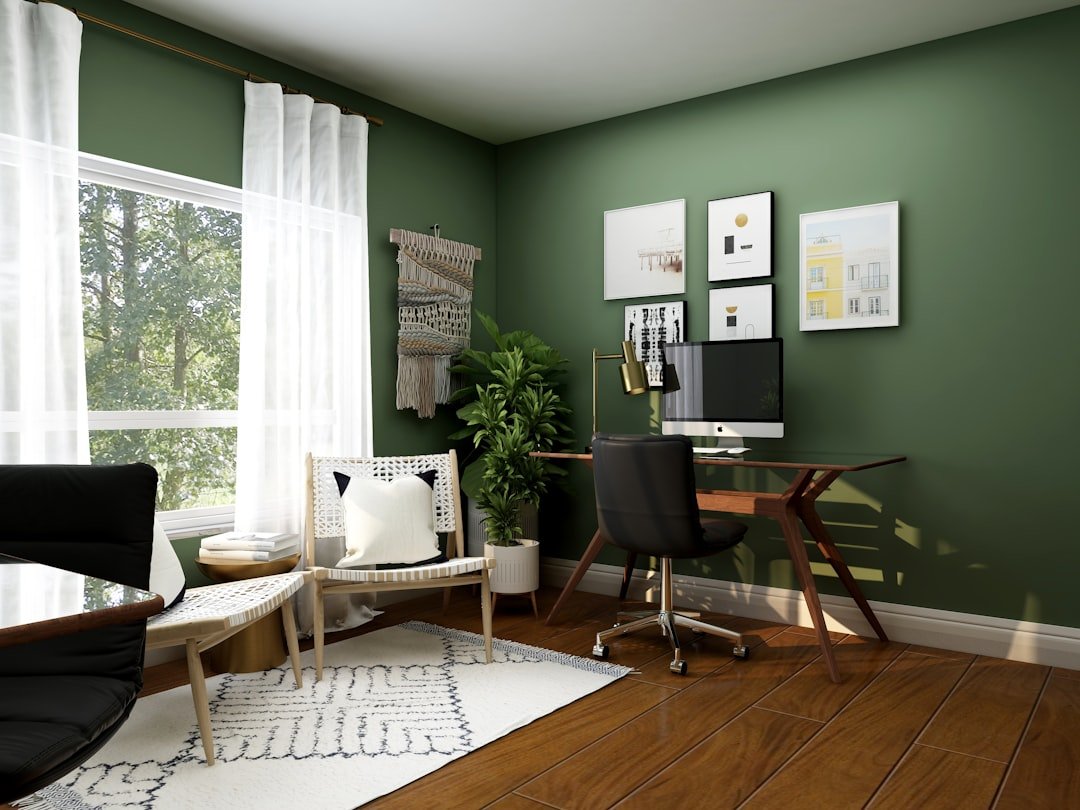
Natural light is useful, but facing a bright window directly can make a screen harder to see. A desk positioned perpendicular to a window often gives you daylight from the side while reducing glare. If the room is deep, bring the desk closer to the window rather than automatically pushing it against the darkest wall.
2. Choose a Desk for the Work You Actually Do
A laptop-only setup needs much less depth than a workstation with two monitors, notebooks, and reference material. Before buying, place your equipment on a dining table and measure the footprint you genuinely use. A shallower desk can preserve circulation in a bedroom office; a larger surface earns its space when your work regularly spreads out.
3. Give the Chair the Serious Budget
The decorative chair that looks perfect in a photo may be uncomfortable by lunch. For long work sessions, prioritize adjustable seat height, back support, and a position that lets your feet rest securely. If the chair looks too technical for the room, soften the office around it with wood, textiles, artwork, and warmer lighting instead of sacrificing comfort.
4. Layer Task and Ambient Lighting
One ceiling fixture rarely produces pleasant or useful office light. Use a desk lamp for focused work and add a floor lamp, wall light, or table lamp elsewhere in the room for softer ambient illumination. A dimmable setup is especially useful when the office doubles as a bedroom, guest room, or living area after work.
5. Use Warm Wood to Take the Corporate Edge Off
Oak, walnut, and other visible wood grains make screens, cables, and black office equipment feel less clinical. You do not need a matching furniture set. A wood desk with painted shelving or a wood cabinet beside a simple desk is often more relaxed and residential.
6. Try Green for a Calm Backdrop
Muted green works particularly well in offices because it has enough color to create identity without demanding constant attention. Sage, olive, moss, and gray-green can all sit comfortably with oak, walnut, cream, black, and aged brass. For more combinations, see our verified guide to sage green room ideas.
7. Keep the Screen Wall Visually Quiet
The wall directly behind your monitor is not the best place for the busiest gallery arrangement in the house. A restrained paint color, a single piece of art, or shallow shelves with breathing room keeps your visual field calmer. Save a more expressive gallery wall for the wall behind you, where it can also improve the background for video calls.
8. Put Closed Storage Near the Desk
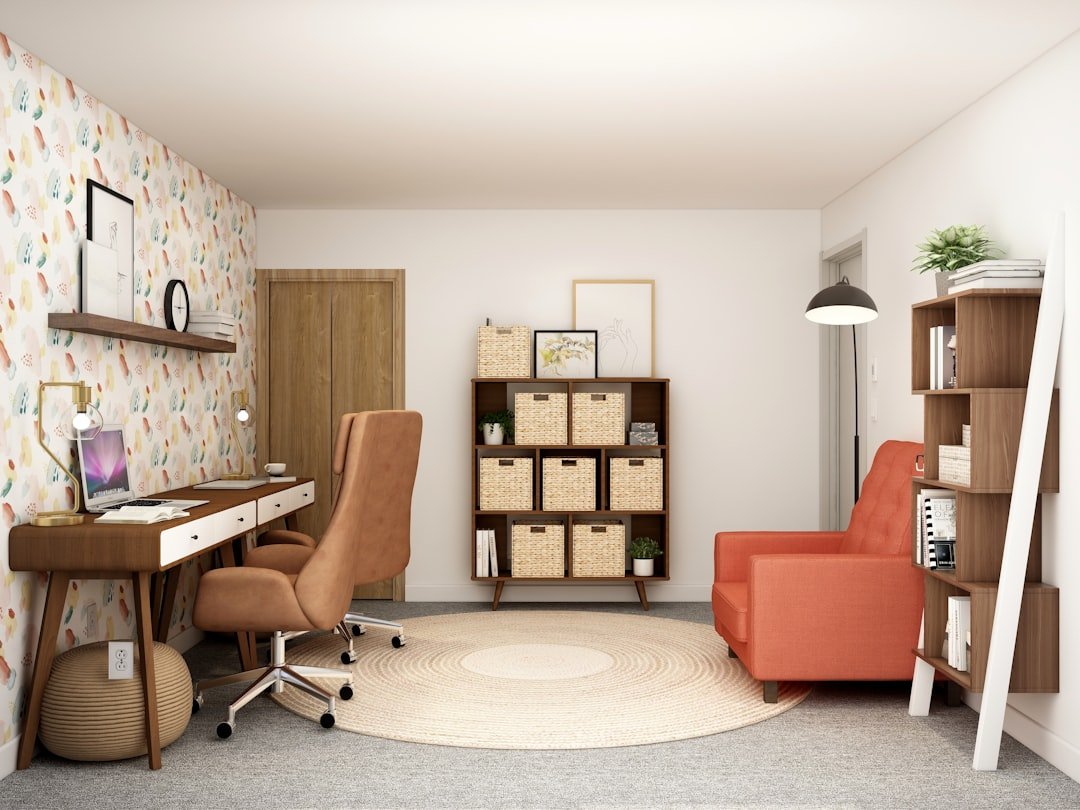
Paper, chargers, stationery, packaging, and backup devices create visual noise quickly. A drawer unit or cabinet beside the desk is usually more useful than open shelves filled with baskets across the room. Store the things you touch every day closest to your seated position.
9. Make Open Shelves Mostly Decorative
Open shelving works best when it is not responsible for hiding everything. Use it for books, a few attractive boxes, art, and objects with enough empty space between them. Put tangled cables, spare tech, paperwork, and bulk supplies behind doors.
10. Hide Cables Before Buying More Decor
A well-styled desk can still look unfinished when six cords fall behind it. Mount a cable tray under the desk, group cords with reusable ties, and position the power strip where plugs remain accessible. If the desk floats in the room, plan the cable route before committing to the position.
11. Float the Desk When the Room Allows It
Not every desk has to face a wall. In a dedicated office, floating the desk can create a more intentional room and give you a better view than a blank wall. Check that you can route power safely and leave comfortable circulation behind the chair before using this layout.
12. Build a Small Office Into a Bedroom Corner
A compact desk can work in a bedroom when it looks like furniture rather than an equipment station. Choose a desk or writing table that relates to the bed and nightstands, use a lamp with a warm shade, and contain office supplies in one drawer or cabinet so work can visually disappear at night. Our small bedroom ideas can help when every inch has to serve more than one purpose.
13. Use a Console-Depth Desk in Tight Spaces
For email, planning, and laptop work, a slim desk can be enough. Keeping the depth modest preserves the walkway in a hallway niche, living room, or apartment. A wall-mounted shelf can serve the same purpose when floor space is particularly limited.
14. Create a Work Zone in an Apartment
Give the office corner one clear boundary: a small rug, a paint block, a bookcase edge, or simply a desk placed at the end of the living area. Repeating the room’s main colors keeps the zone connected to the rest of the apartment. For more renter-friendly approaches, see our apartment decor ideas.
15. Use a Rug to Soften Sound and Define the Zone
A rug helps a hard-surface office feel less echoey and visually anchors a freestanding desk. Choose a low-pile surface that allows the chair to move without catching. Make sure the rug extends far enough behind the desk for the chair to stay on it when pulled out.
16. Add Curtains Even If Privacy Is Not the Problem
Curtains soften a room full of hard desk surfaces, shelving, screens, and cabinets. They can also help control strong daylight. Hang them high enough to emphasize the room height and wide enough that the glass stays mostly clear when the panels are open.
17. Use Art to Make the Office Personal
Choose art because you want to look at it for years, not because it resembles generic workplace decor. A large framed piece, a restrained grid, or a small collection can establish the palette for the room. Pull one or two colors from the art into a rug, lamp, or storage box rather than matching everything exactly.
18. Bring in One Living Plant Where Conditions Suit It
A plant can break up the hard geometry of monitors and shelving, but choose it for the actual light conditions. If the room receives little natural light, use a low-light-tolerant species or skip the plant rather than placing one where it cannot thrive.
19. Keep the Desktop Deliberately Sparse
Leave the items you use every workday on the desk and give everything else a home. A lamp, computer setup, notebook, and one small personal object may be enough. The point is not minimalism for its own sake; it is keeping usable work surface available.
20. Repeat the Home’s Existing Palette
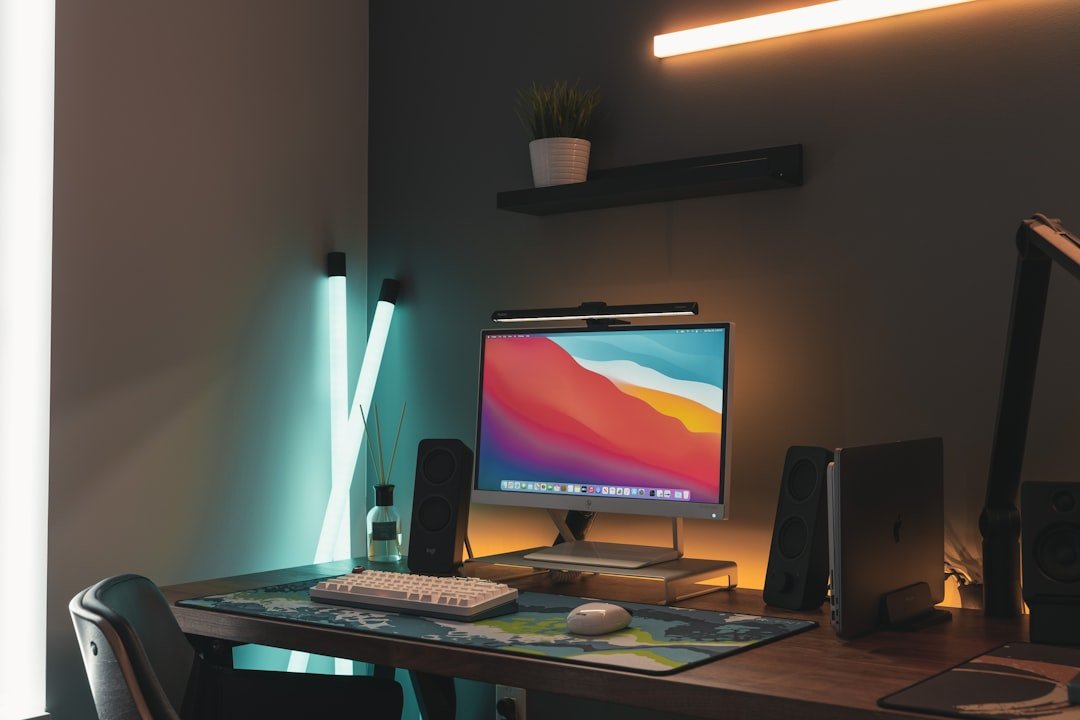
If the office opens off a living room or bedroom, borrow two or three colors already used nearby. Warm neutrals are an easy bridge between work equipment and residential finishes; our warm neutral home decor ideas show how layered cream, beige, wood, and darker accents can keep a quiet palette from becoming flat.
21. Plan a Video-Call Background on Purpose
Sit at the desk and check what the camera actually sees. A cabinet, artwork, a tidy shelf, or a painted wall can create a clean background without turning the whole room into a set. Avoid positioning yourself with a bright uncovered window directly behind you, which can make camera exposure difficult.
22. Give the Workday a Visual Ending
When the office shares another room, create a small shutdown ritual for the space. Close the laptop, put notebooks in a drawer, switch off the task lamp, and leave only the ambient lamp on. A workspace that can visually settle after hours is easier to live with than one that announces unfinished work all evening.
Home Office Mistakes to Avoid
- Choosing the desk before measuring the room: allow space for the chair to pull back and for people to pass comfortably.
- Depending only on overhead lighting: task lighting makes detailed work easier and layered light makes the room more pleasant.
- Using open storage for everything: a little closed storage can make the whole office look calmer.
- Ignoring glare: test the screen position at the time of day when the room gets its strongest sun.
- Decorating before solving cables: cord management has a bigger visual effect than another accessory.
Home Office FAQ
Where should a desk go in a home office?
A position perpendicular to a window is a strong starting point because it can provide side daylight while limiting direct screen glare. The best position still depends on the window orientation, screen placement, outlets, and circulation, so test the setup before committing.
What colors work well in a home office?
Warm whites, soft beige, muted green, dusty blue, and earthy neutrals are flexible choices because they pair easily with wood and common black or white office equipment. Darker colors can also work well when the room has adequate lighting and you want a more enveloping effect.
How can I make a small home office look bigger?
Use a desk with a visually light base, keep the floor visible, take storage vertically, reduce desktop clutter, and use one consistent palette. A large mirror can help bounce light, but place it where reflections will not distract you while working.
How do I make a home office feel cozy without creating clutter?
Use texture rather than lots of small objects. A rug, curtains, wood grain, a fabric shade, one piece of art, and a plant can soften the space while leaving the work surface clear.
Build the Room Around How You Work
The most successful home office is not the one with the most elaborate built-ins. It is the one where the chair feels good, the screen is easy to see, the things you reach for have a place, and the room still feels like home. Solve those practical pieces first. Color, art, textiles, and styling become much easier once the workspace itself works.