20 Dining Room Ideas for a Warm, Collected Space
A dining room feels most inviting when it balances atmosphere with everyday usefulness. In 2026, that means warmer woods, softer shapes, layered lighting, tactile finishes and rooms that feel collected rather than purchased as a matching set.
These dining room ideas work for dedicated rooms, open-plan spaces and compact dining nooks. The goal is not to chase a single look, but to build a space that makes ordinary meals and longer gatherings feel equally comfortable.
What makes a dining room feel current in 2026?
Current dining rooms are becoming warmer, more expressive and more purposeful. Recent U.S. design research points toward tactile materials, curved forms and warm palettes, while designers are also seeing renewed interest in dedicated dining rooms, darker woods and statement lighting.
1. Start with a warm wood table
Walnut, medium oak and other rich wood tones give a dining room visual weight without requiring dark walls. Let visible grain be part of the design, then contrast it with lighter upholstery or a pale rug.
2. Skip the perfectly matching dining set
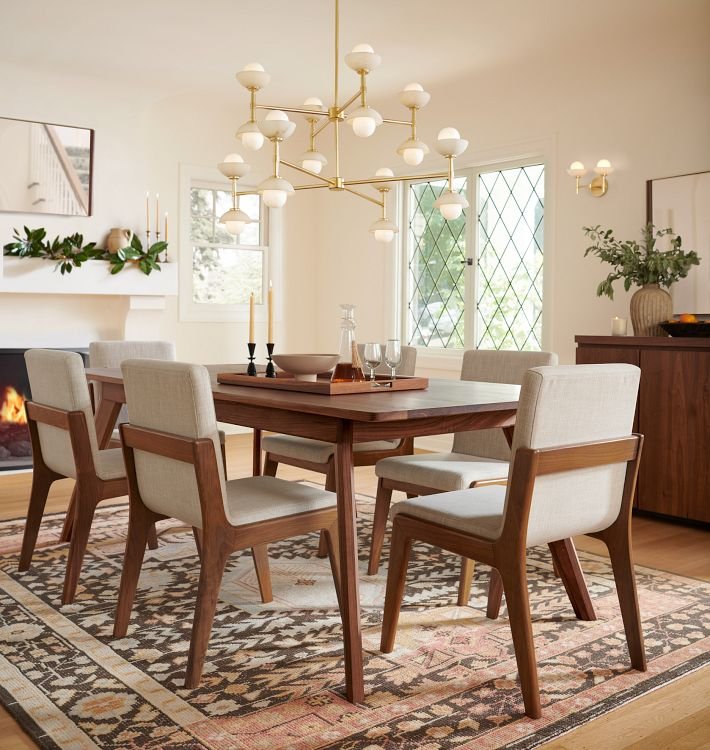
A room often feels more personal when the table, chairs and storage pieces coordinate without being identical. Try a walnut table with upholstered chairs, or a traditional table with cleaner-lined seating. Repeating one finish elsewhere keeps the mix intentional.
3. Make the ceiling light a focal point
A chandelier or pendant can establish the dining zone before any artwork is added. Choose a fixture that relates to the table shape: linear fixtures suit long rectangular tables, while round or branching designs work naturally over round and oval tables.
4. Put the main fixture on a dimmer
Dining rooms need different light levels for homework, casual meals and evening entertaining. Dimming the primary fixture makes one room work for all three. Layering in sconces or a buffet lamp also prevents the ceiling fixture from doing all the work.
5. Try a round table where circulation is tight
Round tables remove sharp corners from narrow paths and can make conversation feel more inclusive. A pedestal base also frees up legroom, which is useful in breakfast areas and smaller apartments.
6. Use upholstered chairs for longer meals
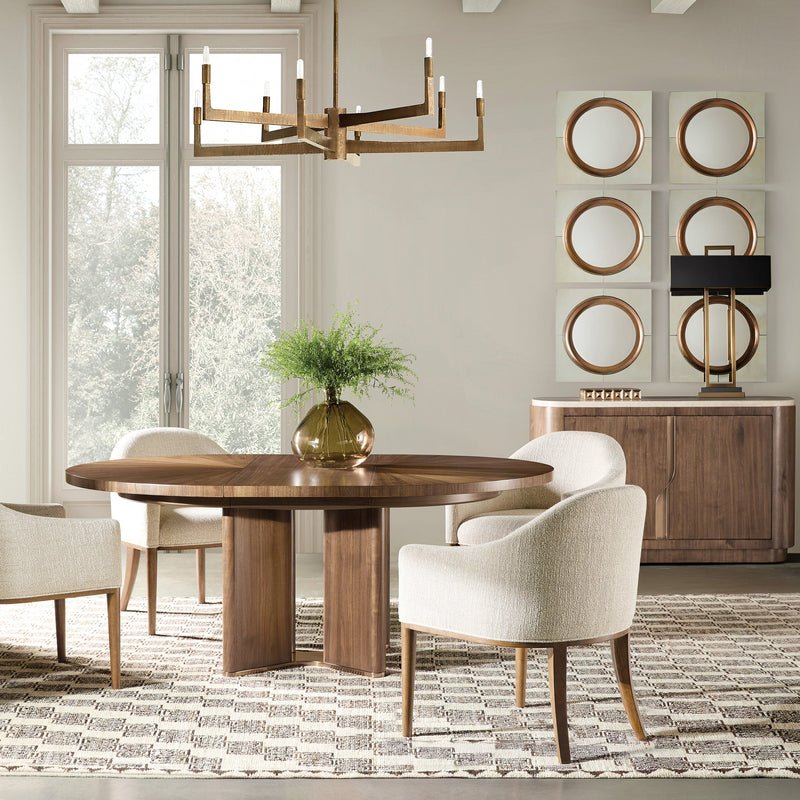
If the dining room doubles as a place to work, talk or play games, comfort matters. Upholstered seats or backs soften all the hard surfaces in the room and make lingering at the table easier.
7. Bring in a moody wall color
Dining rooms can handle deeper color especially well because they are often used in the evening. Chocolate brown, muted olive, charcoal and deep blue can create intimacy. Balance saturated walls with reflective artwork, warm wood, pale fabric or metal accents.
8. Color-drench for a more immersive room
Painting walls, trim and even the ceiling in related tones reduces visual breaks and can make a small dining room feel deliberately enveloping. Use a slightly different sheen on trim if you want subtle architectural definition.
9. Add texture to the walls
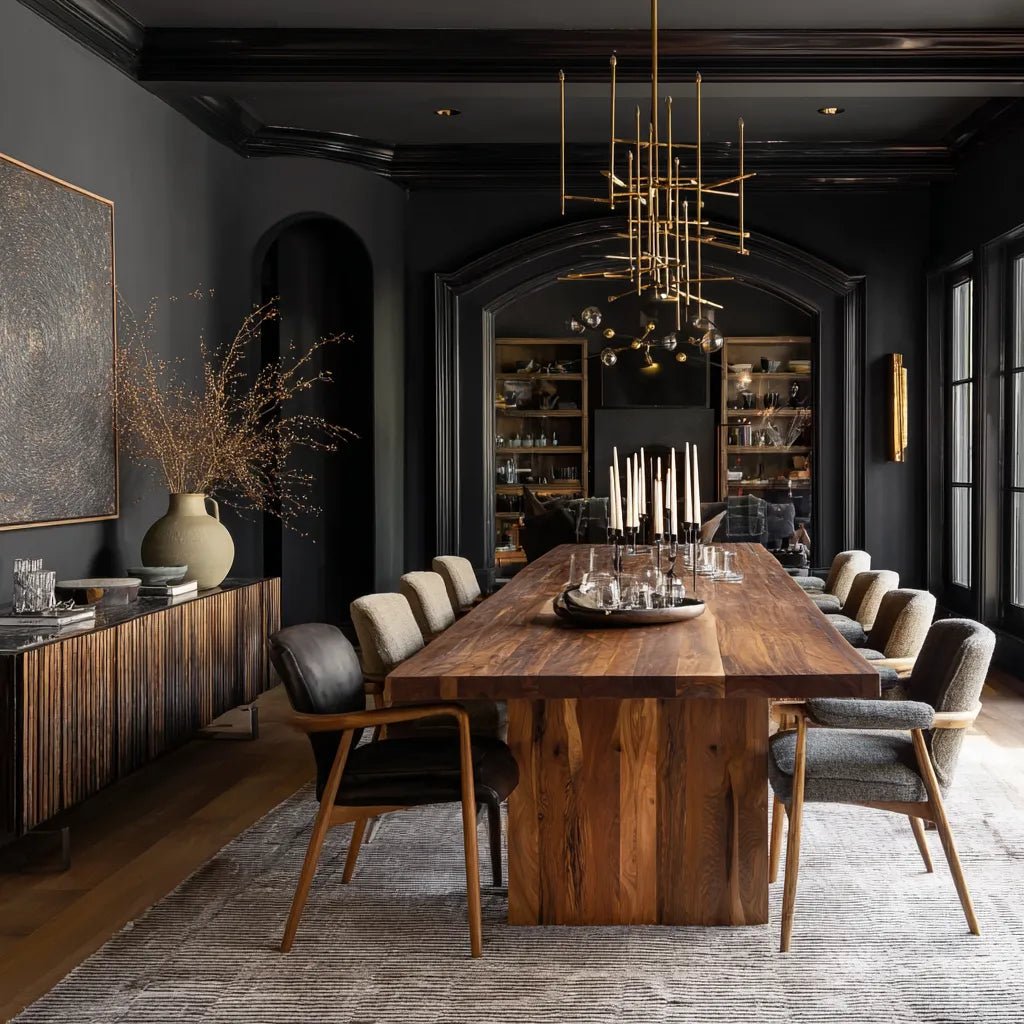
Limewash, plaster-look finishes, grasscloth and linen-effect wallpaper give a dining room depth without relying on busy pattern. Tactile wall finishes are especially effective in neutral schemes where texture does more of the visual work.
10. Use a rug to define an open dining area
In an open-plan home, a rug visually anchors the table and separates dining from living space. Choose a size that allows chairs to remain on the rug when pulled back, and favor a low-pile or easy-clean construction in high-use rooms.
11. Mix one pattern into a mostly quiet room
Pattern can come from drapery, a rug, wallpaper or upholstered end chairs. One confident pattern usually creates more impact than several small unrelated motifs. Pull two or three colors from it into the rest of the room.
12. Choose a sideboard with closed storage
A sideboard gives serving pieces, linens and occasional tableware a permanent home while keeping visual clutter down. Its top also creates a useful landing zone for food, lamps or a restrained seasonal arrangement.
13. Add a buffet lamp for softer evening light
A small lamp on a sideboard introduces light below ceiling level and makes the room feel less flat after dark. Pair it with the chandelier rather than treating it as a replacement.
14. Bring curves into a boxy room
If the architecture is dominated by straight lines, introduce curves through an oval table, rounded chair backs, an arched mirror or a globe pendant. Soft geometry can improve both movement and visual balance.
15. Use art at a scale that matches the table
A single substantial artwork can calm a room filled with chair legs, table settings and lighting. Over a sideboard, leave enough visual breathing room that the art and furniture read as one composition instead of two unrelated pieces.
16. Layer linen or wool for softness
Dining rooms contain many hard materials, so fabric matters. Linen curtains, wool rugs and textured upholstery absorb some visual harshness and make wood, stone and metal feel more comfortable.
17. Create a dining nook with banquette seating
Built-in or freestanding banquettes can turn an overlooked corner into a real dining zone. They are particularly useful where pushing chairs back would block a walkway. Add washable cushion covers if the nook is used daily.
18. Let a small dining area do double duty
In an apartment, the dining table may also be a desk or project surface. Keep nearby storage closed, use a comfortable chair, and choose lighting bright enough for tasks but dimmable for dinner. For more compact-home strategies, see our apartment decor ideas.
19. Borrow earthy color from the rest of the home
Muted green, clay, brown and warm beige connect easily with wood furniture and natural fibers. If you want a green-led palette, our olive green decor ideas show how to combine the shade with cream, wood and warmer accents. For softer neutrals, explore these modern beige interior ideas.
20. Keep seasonal styling edited
Instead of replacing the whole room each season, change a few tactile elements: branches, table linens, candles or a centerpiece. In fall, richer rust, tobacco and moss tones can layer naturally over a neutral base; these autumn color palettes offer combinations that work beyond a single holiday.
Dining room mistakes to avoid
- Buying everything as one set: it can make the room feel more like a showroom than a home.
- Using only overhead light: add at least one lower source where practical.
- Choosing chairs for looks alone: comfort matters in a room designed for lingering.
- Ignoring circulation: leave practical paths around the table and to adjacent rooms.
- Using a rug that is too small: chair legs catching the rug edge quickly becomes frustrating.
Frequently asked questions
What colors are popular for dining rooms in 2026?
Warm, grounded colors are prominent, including chocolate brown, muted green, soft charcoal, clay and warm neutrals. The best choice still depends on daylight, adjoining rooms and the wood tones already in the space.
Are formal dining rooms coming back?
Design coverage in 2026 shows renewed interest in dedicated dining spaces, but the newer version is less stiff. The emphasis is on comfortable rooms that can be used for ordinary meals as well as entertaining.
What is the easiest way to update a dining room?
Lighting is one of the highest-impact changes. A more expressive pendant or chandelier, a dimmer and one lower light source can change the atmosphere without replacing the main furniture.
How do you make a small dining room look bigger?
Keep circulation clear, consider a round or oval table, use visually lighter chairs, hang a mirror where it can reflect useful light, and avoid furniture that is too deep for the room.
Final thoughts
The strongest dining rooms are not defined by one trend. They combine comfortable seating, practical circulation, flattering light and materials that feel good to live with. Start with the table and lighting, then add color, texture and storage in layers. That approach creates a room that feels current now but can evolve without a complete redesign.
Image sources: Rejuvenation and 2Modern product imagery; Aura Modern Home editorial imagery. Images are hosted locally on DecorHues for article use.