
24 Small Bedroom Ideas That Feel Calm, Not Cramped
Most small bedrooms go wrong the same way. Too much furniture fighting over the same few square feet, plus a wall color that pulls everything inward.
The fixes are cheaper than you think. A lighter wall. A bed moved three feet. Lighting that comes off the wall instead of eating half your nightstand.
Here are 24 small bedroom ideas that hold up in rooms around 10 by 10 feet or smaller, with real paint names and codes you can take straight to the store.
Quick answer: what makes a small bedroom feel bigger?
Paint the walls a light, warm neutral with an LRV above 60, such as Benjamin Moore White Dove OC-17 or Sherwin-Williams Alabaster SW 7008, and carry that same color onto the trim and ceiling. Push the bed against the longest uninterrupted wall, keep one clear walking lane of at least 24 inches, and get storage off the floor with a storage bed, wall sconces and a tall narrow wardrobe. Finish with one large mirror rather than a cluster of small frames, and hold the palette to three colors so the eye reads the room as a single space.
Paint Colors That Make a Small Bedroom Breathe
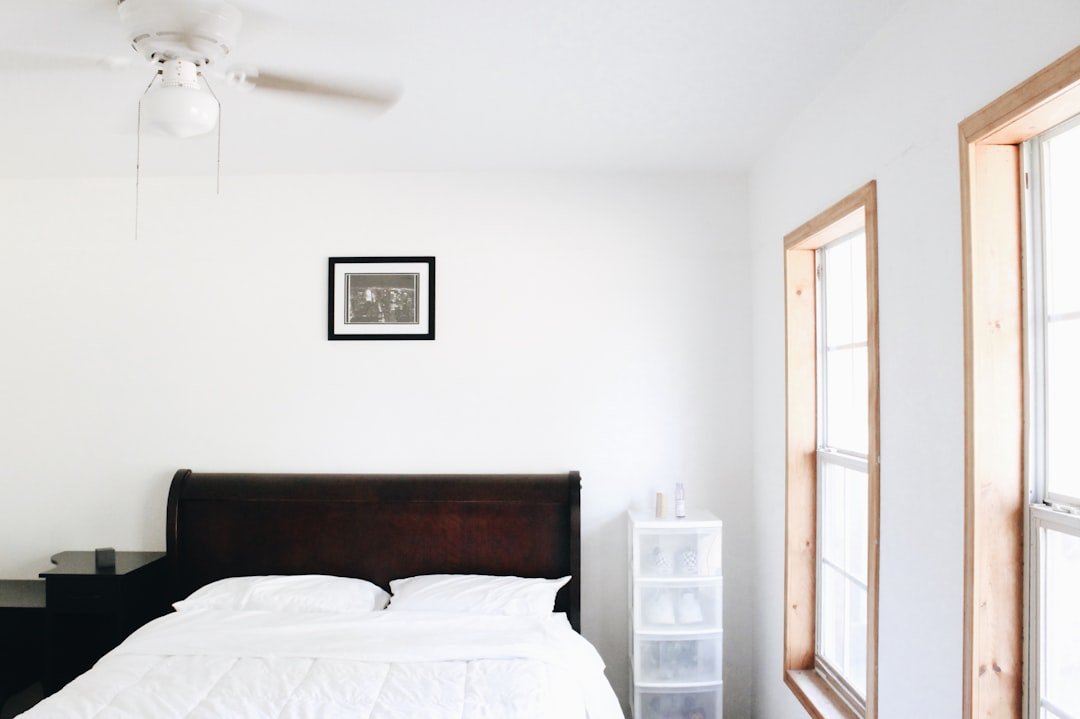
Color does more work in a small room than furniture ever will, and it is the cheapest thing to change. These five are the ones worth starting with.
1. Start with a warm white above LRV 80
Light reflectance value tells you how much light a color bounces back. Above 80 and a wall reads as genuinely bright. Benjamin Moore White Dove OC-17 sits around 83 and has just enough warmth to avoid looking clinical. Sherwin-Williams Alabaster SW 7008 lands near 82 and leans a touch creamier. Both play well with oak, brass and white bedding.
2. Skip stark white in a north-facing room
North light is cool and blue. A pure white wall under it goes gray and slightly sad by three in the afternoon. Benjamin Moore Pale Oak OC-20 at an LRV near 69 or Sherwin-Williams Shoji White SW 7042 near 74 hold onto warmth without turning yellow. They still read as neutral, just kinder.
3. Paint the trim and ceiling the same color as the walls
This one is free and it changes everything. When baseboards, door casings and ceiling all wear the same color, the eye stops counting edges and the room stops feeling chopped up. Use a flat or matte on the ceiling and walls, eggshell or satin on the trim, same color code. Designers call it color drenching. In a 10 by 10 room the effect is immediate.
4. Try a soft green-gray for a calmer room
Not every small bedroom needs to be white. Sherwin-Williams Sea Salt SW 6204 at an LRV around 63 shifts between green and blue depending on the hour, and it keeps the room quiet without darkening it. Farrow and Ball Cromarty No. 285 does something similar with a chalkier finish. Pair either with linen bedding and warm wood.
5. Or go dark on purpose
If the room gets almost no natural light, fighting for brightness is a losing game. Lean the other way. Benjamin Moore Hale Navy HC-154 or Chelsea Gray HC-168 on every surface turns a dim box into something that feels deliberate and cocooning. The walls recede rather than close in. We went deep on this in our guide to dark bedroom colors that feel cozy rather than cave-like.
Bed Placement and Layout That Free Up Floor Space
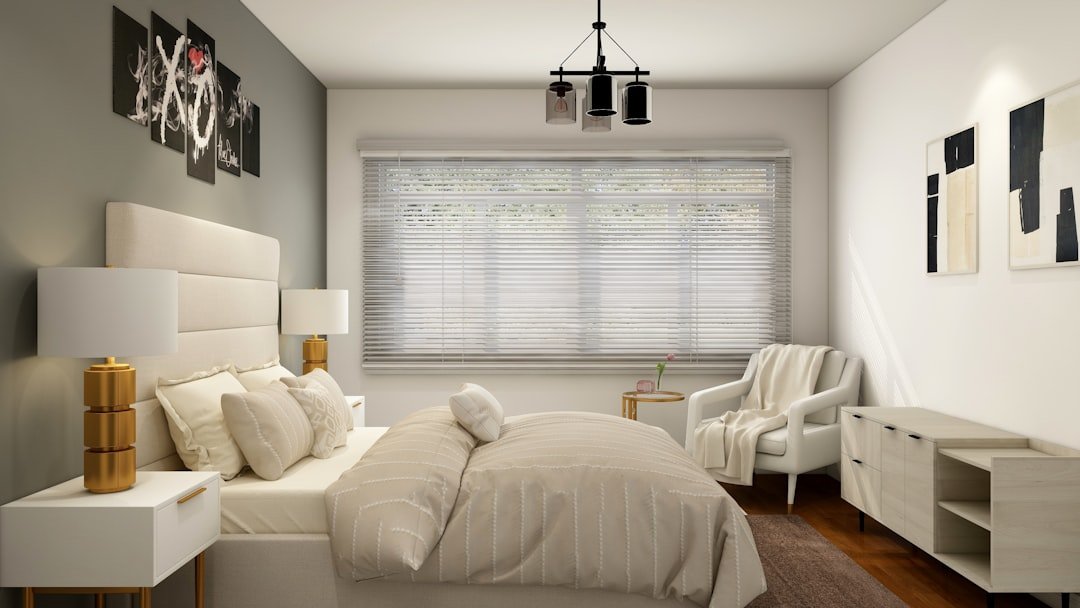
Before you buy anything, move what you already own. Layout is the highest-return change in a small bedroom and it costs an afternoon.
6. Put the bed on the longest uninterrupted wall
Find the wall with no door swing, no closet, no radiator. That is where the bed goes, headboard flat against it. Floating a bed away from a wall is a large-room luxury. In a small room it costs you a walkway on both sides and gains you nothing.
7. Center it under the window if that is the only option
Plenty of small bedrooms have exactly one wall that works, and it happens to have a window in it. That is fine. Center the bed under it, use a low headboard that sits below the sill, and hang the curtains from a rod mounted near the ceiling so the window still reads as full height.
8. Consider a full instead of a queen
A queen is 60 by 80 inches. A full is 54 by 75. That six inches of width and five of length is the difference between a nightstand fitting and not fitting. In a room under 10 by 10, two people will usually take the smaller mattress with usable floor over the bigger one with none.
9. Choose a low-profile frame and protect one clear lane
Skip the footboard and the tall four-poster. A platform frame that sits low leaves more visible wall above it, and visible wall reads as space. Then measure your walking lane. Twenty-four inches is the tight minimum on the side you use most, thirty is comfortable. Whatever furniture breaks that rule is the furniture that leaves.
Storage That Disappears Into the Room
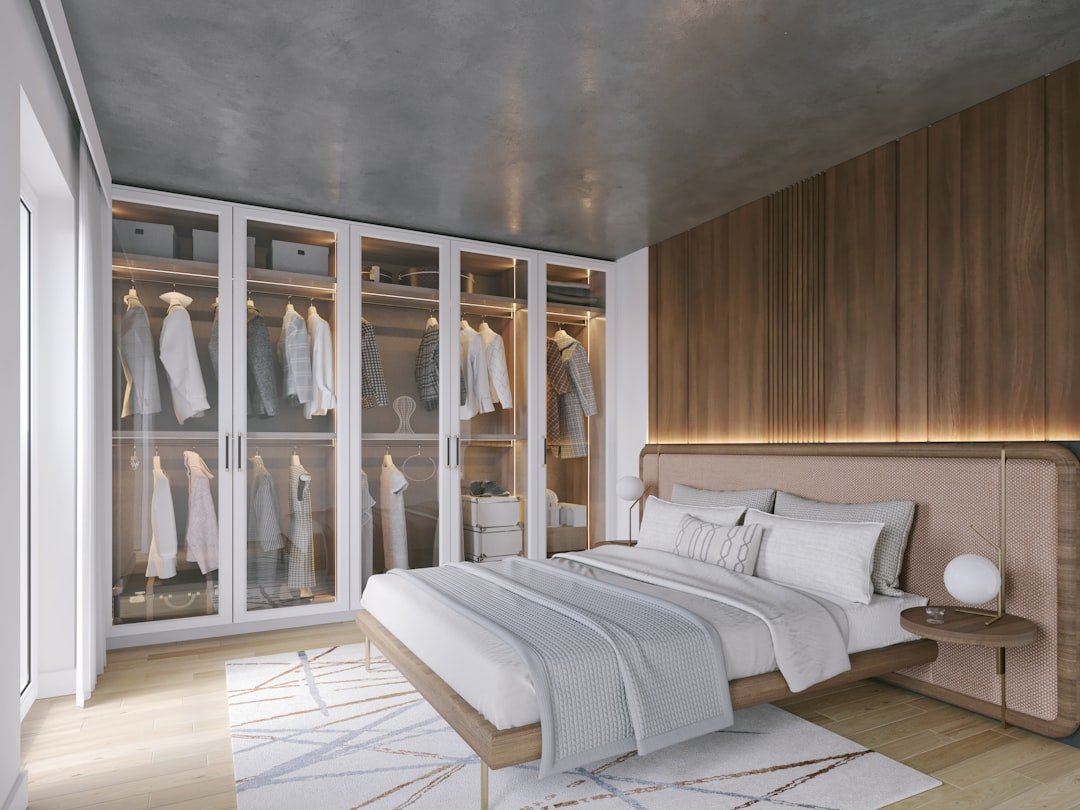
The goal is not less stuff. The goal is stuff you cannot see from the doorway.
10. Buy the storage bed
A frame with built-in drawers replaces an entire dresser, which is often the single largest object you can remove from a small bedroom. The IKEA Nordli and Malm frames both do this cheaply. Off-season clothes, spare bedding and shoes all go under the mattress and out of the visual budget of the room.
11. Float the nightstand
A wall-mounted shelf beside the bed does the job of a nightstand and gives you back the floor underneath it. You see more flooring, so the room reads larger, and vacuuming gets easier. Mount it level with the top of the mattress or an inch or two above.
12. Go vertical with a tall narrow wardrobe
Two feet of depth is two feet of depth whether the unit is four feet tall or eight. Take the height. A tall wardrobe like the IKEA Pax system holds far more per square foot of floor, and running it to within a few inches of the ceiling draws the eye up. Paint it the wall color if you want it to vanish completely.
13. Use flat bins under the bed
Even a frame without drawers has usable clearance. Low fabric bins such as the IKEA Skubb boxes slide in and out without a fight, and they keep dust off whatever is in them. Label them. Under-bed storage you cannot identify becomes under-bed storage you never open.
14. Trade the dresser for hooks and a picture ledge
A row of wall hooks behind the door handles robes, bags and the outfit you laid out for tomorrow. A narrow picture ledge holds a book, a candle and a small plant without claiming any floor. Between the two, most people find the dresser was carrying less than they assumed.
Lighting That Opens Up a Small Bedroom
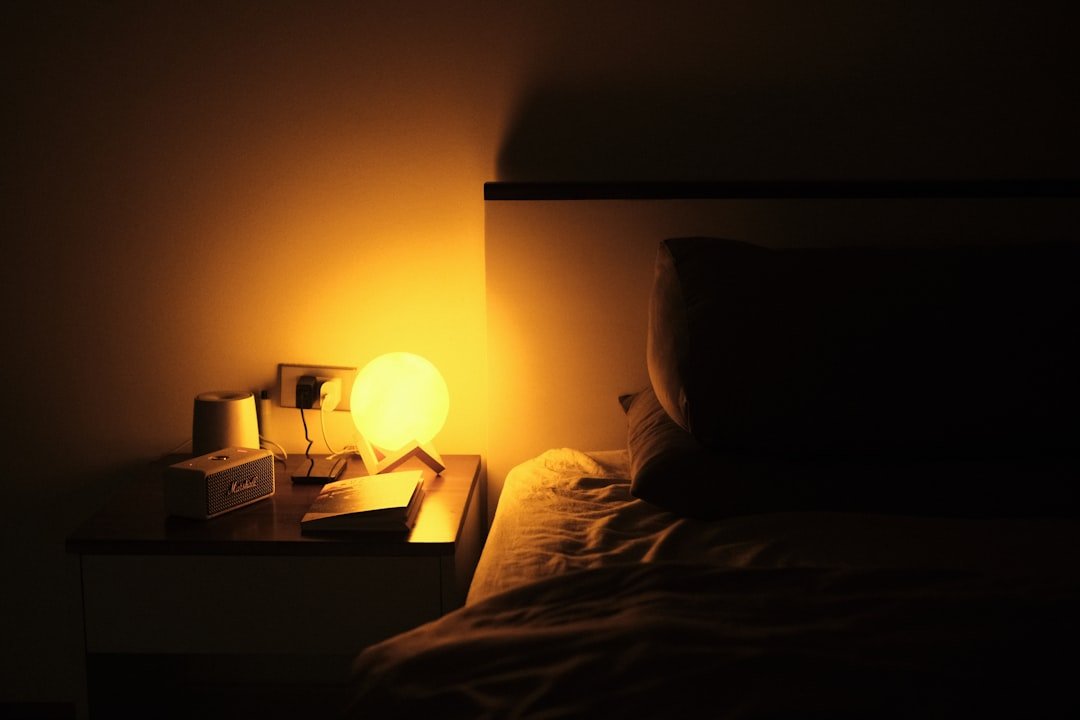
One ceiling fixture doing all the work is why a lot of small bedrooms feel like a hotel corridor. Spread the light out.
15. Put the reading light on the wall
Wall sconces flanking the bed free the entire nightstand surface and throw light exactly where you read. Renters are not shut out of this. Plug-in sconces mount with two screws or heavy-duty adhesive and the cord can run down inside a slim cord cover painted to match the wall.
16. Use three light sources at three heights
Ceiling, mid-level and low. An overhead fixture for general light, sconces or a table lamp at eye level, and something low like a small floor lamp in the corner. Layered light gives a room depth. A single bright source flattens it and shows you every wall at once.
17. Standardize on 2700K bulbs and add a dimmer
Mixed color temperatures make a room look patchy and slightly off, and the effect is worse when the walls are close. Put 2700K warm white in everything. A dimmer on the overhead costs under twenty dollars and turns the same room into two different rooms depending on the hour.
18. Hang curtains high and wide
Mount the rod four to six inches above the window frame, or higher if you can, and let it extend eight to twelve inches past each side. The window looks taller and wider, the curtains stack off the glass instead of over it, and more daylight actually gets in. Use a light, loosely woven fabric so it does not read as heavy.
Mirrors, Art and Rugs That Stretch the Room
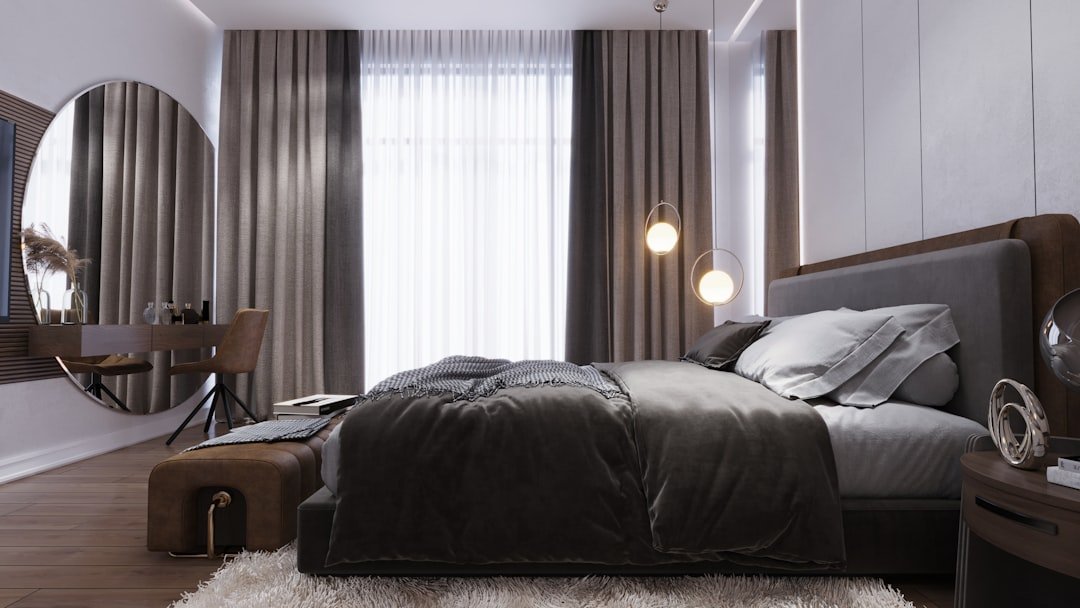
Small rooms punish clutter fastest on the walls and the floor. Fewer, bigger pieces almost always win.
19. Hang one large mirror where it catches daylight
A full-length or oversized mirror placed opposite or perpendicular to the window bounces real daylight deeper into the room and doubles the visual depth of whatever it reflects. One big mirror beats three small ones. Lean it against the wall if drilling is not an option, but anchor it properly if there are kids or pets around.
20. One large piece of art over the bed, not a gallery wall
Gallery walls are busy by design, and busy is the last thing a tight room needs. A single piece roughly two-thirds the width of the bed, hung so its center sits around 57 to 60 inches off the floor, gives the room a focal point and leaves the surrounding wall calm.
21. Get the rug scale right
An undersized rug floating in the middle of the floor makes a small room look smaller. Either run a 5 by 7 or 6 by 9 under the lower two thirds of the bed so it extends past both sides, or skip the big rug entirely and put a runner along each side you walk on. Nothing in between.
Small Bedroom Ideas for Rentals and Awkward Rooms
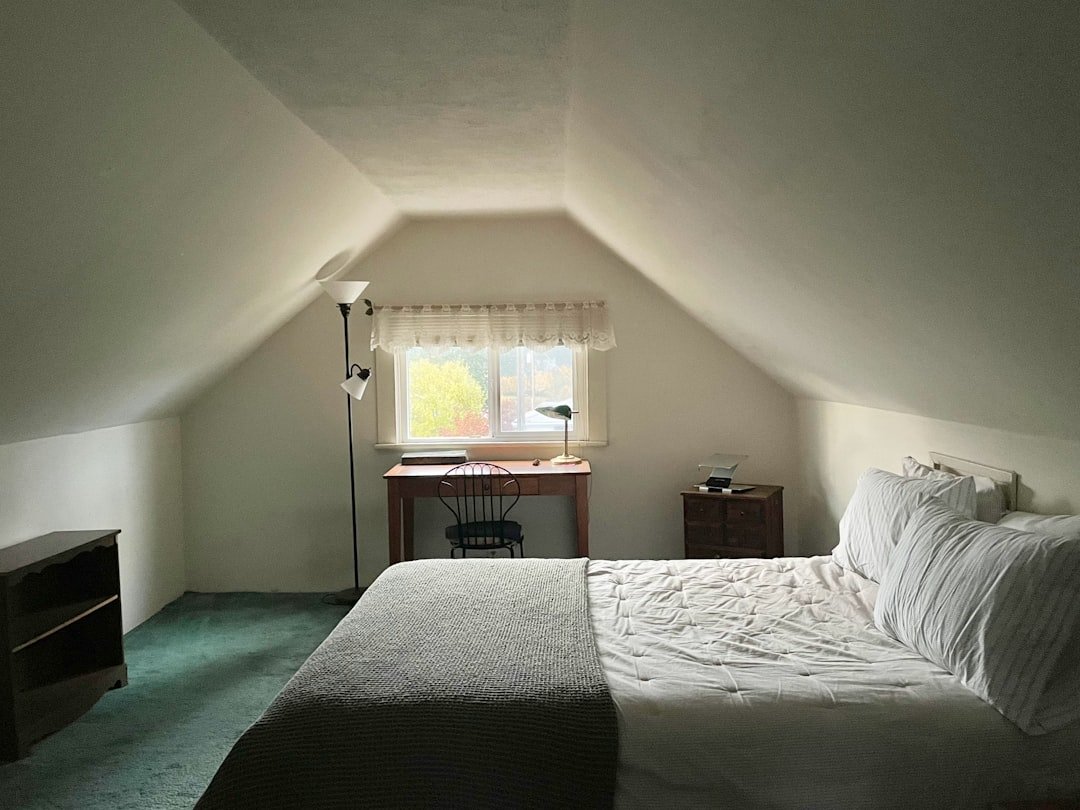
Not every room is a neat rectangle, and not every wall is yours to paint.
22. Do one accent wall in peel and stick
If painting is off the table, removable wallpaper behind the bed gives you a headboard-shaped focal point without touching the other three walls. Keep the pattern small in scale and low in contrast. Big bold repeats crowd a small room fast.
23. Paint slanted ceilings and walls one single color
Attic and dormer bedrooms have angles everywhere, and picking out each plane in a different shade turns the room into origami. Roll one color over walls, slopes and ceiling. The geometry softens instantly and the low side stops feeling like a mistake.
24. Match the room to the rest of the home
A small bedroom that shares a palette with the hallway and living room reads as part of a bigger whole rather than a separate little box. If your main space is already built on warm neutrals, borrow from it. Our guides to small living room color ideas and cozy bedroom color schemes are a good place to pull a matching palette.
How to Choose the Right Fix for Your Room
Work in this order and you will not waste money.
Start with light. Stand in the room at the hour you use it most. If daylight is decent, go light and warm on the walls. If it is genuinely dim all day, stop fighting it and go dark and enveloping instead.
Then measure. Sketch the room with the door swing and window marked. Try the bed on each wall on paper before you move anything heavy. Most people find one arrangement they had never considered.
Then subtract. Take out anything that breaks the 24-inch walking lane. Replace what it was doing with vertical or hidden storage, not with another piece of floor furniture.
Finish with light fixtures and textiles. Sconces, dimmers, high curtains, one mirror, one piece of art. This is the layer that makes a small room feel finished rather than merely tidy. If green is your direction, the same logic applies in our roundup of green bedroom ideas for a calm, restful space.
Small Bedroom FAQ
What color makes a small bedroom look bigger?
A light, warm neutral with an LRV above 60 does the most work. Benjamin Moore White Dove OC-17, Sherwin-Williams Alabaster SW 7008 and Benjamin Moore Pale Oak OC-20 are all reliable. The bigger gain comes from painting the trim and ceiling the same color, which removes the visual lines that make a room feel boxed in.
Should the ceiling be white in a small bedroom?
Not necessarily. A ceiling painted the same color as the walls usually makes the room feel taller than a contrasting white ceiling does, because there is no hard line where the wall stops. If you prefer contrast, keep the ceiling within a shade or two of the walls rather than jumping to bright white.
Where should the bed go in a small bedroom?
Against the longest wall that has no door swing, closet or radiator interrupting it. If the only workable wall has a window, center the bed under it and use a low headboard. Keep at least 24 inches of clear walking space on the side you get in and out of.
Can you use dark paint in a small bedroom?
Yes, and it often works better than a compromise mid-tone. Dark colors blur the corners so the walls read as further away rather than closer. Colors like Benjamin Moore Hale Navy HC-154 or Chelsea Gray HC-168 need warm layered lighting to succeed, so plan sconces and a dimmer alongside the paint.
What size rug works in a small bedroom?
A 5 by 7 or 6 by 9 placed under the lower two thirds of the bed, extending past both sides, is the safest choice. If the floor plan is too tight for that, use runners on each side of the bed instead. Avoid a small rug stranded in the middle of the room.
How do you add storage without a dresser?
Use a bed frame with built-in drawers, add a tall narrow wardrobe rather than a wide low one, slide flat bins under the bed, and hang hooks plus a picture ledge on the walls. Between those four, most people cover everything a dresser was holding and get several square feet of floor back.
Do mirrors actually make a room look bigger?
They make a room look deeper, which is close enough to count. The effect depends on placement. A mirror opposite or perpendicular to a window reflects daylight and a view, which reads as extra space. A mirror facing a blank wall just reflects a blank wall.
Bringing It Together
Pick two things from this list and do them this weekend. Move the bed to the longest wall, then get the nightstand off the floor. That combination alone changes how the room feels when you walk in.
Paint next, once you have lived with the new layout for a week and know which wall actually catches the light. For more ideas on making tight spaces work, browse our full small space decor ideas collection.