
18 Ceiling Ideas That Make the Fifth Wall Matter
The best ceiling ideas make the ceiling feel connected to the room instead of treating it as a blank white lid. You can do that with color, wallpaper, wood, molding, beams, reflective finishes or simply a better relationship between the ceiling and the lighting below it.
For 2026, the ceiling is getting more attention in U.S. interiors. House Beautiful’s 2026 dining-room trend forecast highlights reflective ceilings, including saturated high-gloss paint and metallic finishes, while broader design coverage continues to favor warmer materials, stronger architectural detail and more personal rooms.
Quick answer: what is the easiest way to make a ceiling more interesting?
Paint is usually the simplest starting point. Choose a ceiling color that either repeats the walls, deepens them by a shade or two, or deliberately contrasts with them. If you want more texture, wallpaper, wood planks, beams or applied molding can make the ceiling a true architectural feature.
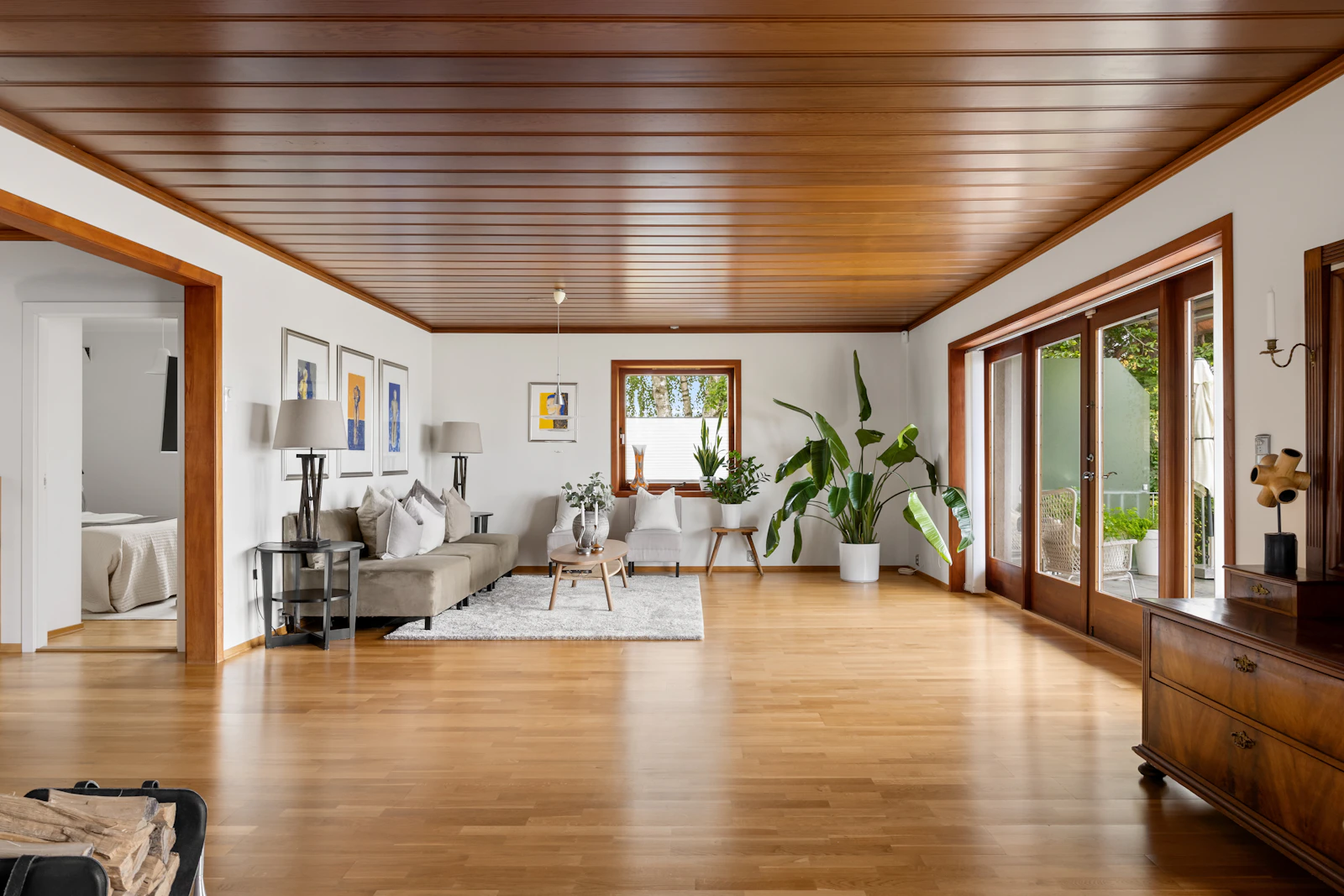
1. Paint the ceiling a warm off-white instead of stark white
A soft cream, parchment or warm white can make a room feel more cohesive when the walls, flooring and furniture already lean warm. This is especially useful in rooms with oak, walnut, terracotta, beige or olive.
The goal is not to make the ceiling noticeable. It is to remove the cold break that can happen when warm walls meet a blue-white ceiling. This works naturally with the palette ideas in our warm neutral home decor guide.
2. Carry the wall color onto the ceiling
Using one color across the walls and ceiling creates an enveloping effect and reduces visual chopping at the top of the room. It works especially well in bedrooms, powder rooms, dining rooms and offices where a more intimate mood is welcome.
You do not have to use the exact same finish everywhere. The color relationship matters more than making every surface equally reflective. For a deeper look at the technique, see our guide to color drenching.
3. Use the ceiling for the darker version of your wall color
If full color drenching feels too immersive, keep the walls lighter and take the ceiling one or two steps deeper. A pale mushroom room can handle a taupe ceiling; soft blue walls can take a smoky navy overhead; sage walls can pair with an olive-toned ceiling.
This approach works best when the room already has enough natural or layered artificial light to keep the darker plane from feeling heavy.
4. Try a high-gloss ceiling in a small dose
A reflective finish can turn a ceiling into a light-catching surface, particularly in dining rooms, powder rooms and compact spaces used mostly in the evening. Current 2026 design coverage is treating reflective ceilings as a decorative feature rather than a purely practical finish.
High-gloss surfaces show more imperfections than flatter finishes, so prep matters. If the ceiling has patched areas, waviness or old texture, a more forgiving sheen may produce a cleaner result.
5. Wallpaper the ceiling and keep the walls quieter
A patterned ceiling can bring personality to a room without covering every vertical surface. Botanical prints, small geometrics, stripes and mural-style papers are all possibilities.
Keep the rest of the room disciplined: repeat one or two colors from the ceiling in upholstery, curtains or a rug rather than trying to match every shade. The same pattern-scale principles apply as in our pattern drenching ideas.
6. Use ceiling wallpaper in a powder room
Small powder rooms are useful places to experiment because the ceiling area is limited and the room is meant to feel a little special. A patterned ceiling can sit above painted walls, tile or wainscoting without requiring a whole-house commitment.
If the room has a lower ceiling, choose a pattern with enough open background so the surface still has visual breathing room.
7. Add natural wood planks for warmth
Wood on the ceiling adds texture before you introduce a single accessory. It works with modern, rustic, coastal, farmhouse and midcentury interiors depending on the species, stain and plank width.
In a contemporary room, keep the wall color and furniture simple so the grain becomes the main texture. Medium and darker woods look especially good with cream, warm white, muted green and brown.
8. Use beams to create rhythm, not just rustic character
Ceiling beams can make a long room feel more structured and can visually divide an open plan into zones. They do not have to read as farmhouse: slim beams with clean spacing can feel modern, while reclaimed-looking timbers create a more traditional effect.
Decorative faux beams are different from structural beams. Do not modify, cut or hang from structural members without appropriate professional guidance.
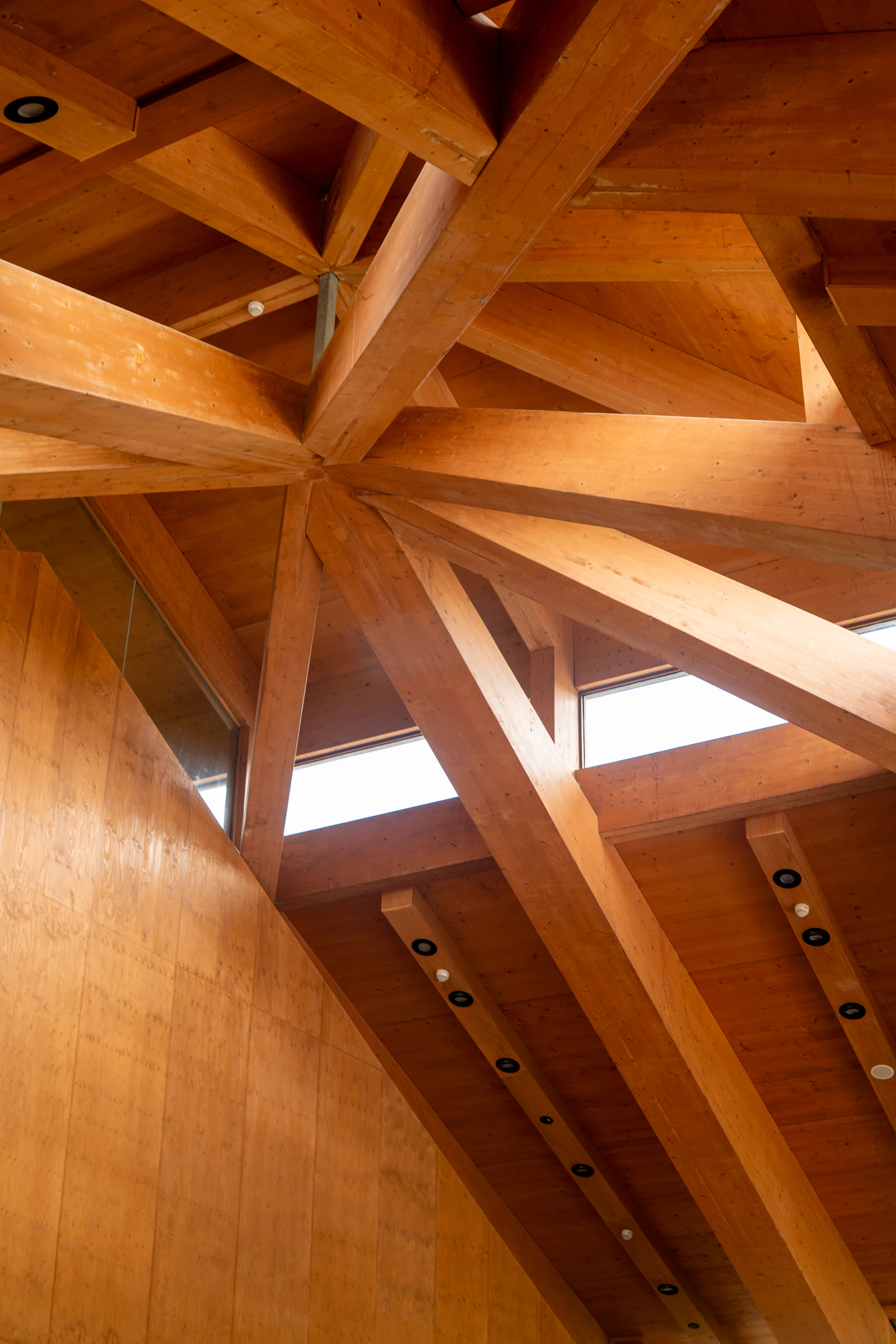
9. Paint existing beams instead of removing them
If dark beams dominate a low room, painting them to match the ceiling can preserve the architecture while reducing contrast. If the room feels too plain, the opposite works too: keep the ceiling light and give the beams a deeper wood, charcoal or muted color.
Use the same logic as trim—the stronger the contrast, the more attention the ceiling architecture will receive.
10. Add simple box molding for a tailored look
Applied molding can turn a flat ceiling into a subtle architectural feature without the depth of a full coffered system. Large, simple rectangles generally feel calmer than many tiny boxes.
This is especially effective in dining rooms and bedrooms where a central light fixture can sit within the main panel.
11. Use a coffered ceiling in a room with enough height
Coffered ceilings add depth, shadow and repetition, making them best suited to rooms that can visually handle extra structure overhead. The grid can be painted all one color for a quieter result or use wood within the recessed panels for more contrast.
Before adding a dropped grid, consider finished ceiling height, sprinkler or smoke-detector placement, HVAC registers and lighting locations.

12. Highlight a tray ceiling with tonal color
If your home already has a tray ceiling, use it as a built-in opportunity. Paint the raised center the wall color, a darker related tone or a gentle contrast while keeping the perimeter lighter.
Avoid outlining every edge with a different color. Two related tones usually create more architectural depth with less visual noise.
13. Use limewash or plaster overhead for quiet texture
A soft mineral-looking finish can make a ceiling feel handmade without requiring a strong pattern. This works particularly well in rooms with stone, wood, linen and other natural textures.
Because specialty finishes respond differently to substrate, humidity and application technique, follow the product manufacturer’s instructions and test the look before committing. Our textured wall ideas cover related finish choices.
14. Match the ceiling treatment to the room’s lighting plan
A great ceiling treatment can be undermined by random fixtures. Plan pendants, recessed lights, sconces and lamps as one system so the ceiling architecture and illumination support each other.
For living areas, our living room lighting guide explains how ambient, task and accent lighting work together.
15. Use ceiling color to zone an open-plan space
You can visually define a dining area, reading area or kitchen zone by changing the ceiling color or material over that portion of an open room. A wood panel over a dining table or a deeper painted rectangle can create a boundary without adding walls.
Repeat something from the zone below—wood tone, upholstery color, rug color or metal finish—so the ceiling detail feels connected rather than arbitrary.
16. Keep low ceilings simple but intentional
Low ceilings do not have to stay bright white, but heavy beams, deep coffers and too many dropped details can make the room feel compressed. Paint, shallow molding or a subtle wallpaper generally preserve more visual height.
In compact rooms, coordinate the ceiling with curtains, rugs and lighting instead of adding several competing architectural treatments. Our small living room color ideas use the same principle of controlling contrast.
17. Make a dark ceiling feel intentional with warm lighting
Charcoal, brown, deep green and navy ceilings can create a cocooning effect, especially in bedrooms, media rooms and dining rooms. Keep the result from feeling flat by layering warm lamps and sconces and repeating the ceiling color elsewhere in smaller amounts.
If you like deeper rooms, see our dark bedroom color ideas for ways to balance dark surfaces with textiles and light.
18. Use removable treatments when you rent
Renters can still treat the ceiling as part of the room without making permanent changes. Depending on the lease and surface, lightweight removable decals or temporary wallpaper may work, but overhead adhesion must be secure.
Always test removable products in an inconspicuous spot and follow the manufacturer’s installation guidance. If ceiling application is not recommended, use the same pattern or color idea on a removable wall panel, curtain or large textile instead.
Which ceiling idea fits your room?
| Room goal | Ceiling idea | Best for |
|---|---|---|
| Warmer, quieter look | Warm white or tonal paint | Living rooms, bedrooms, kitchens |
| More personality | Wallpaper or saturated paint | Powder rooms, dining rooms, offices |
| More architecture | Beams, molding or coffers | Rooms with enough ceiling height |
| Natural texture | Wood, limewash or plaster | Warm modern and organic interiors |
| Low-commitment change | Paint or renter-safe removable treatment | Apartments and budget updates |
Common ceiling decorating mistakes
- Choosing a ceiling treatment without considering the room’s finished height.
- Using too many competing features—bold ceiling, busy wallpaper, statement rug and multiple focal points at once.
- Ignoring ceiling vents, detectors, sprinklers and lighting when planning molding or wallpaper.
- Using high-gloss paint on a poorly prepared ceiling and expecting it to hide flaws.
- Adding faux or decorative beams where they visually crowd doors, windows or tall cabinetry.
- Assuming a decorative ceiling beam can support weight like a structural member.
- Choosing a strong ceiling color that is not repeated anywhere else in the room.
Frequently asked questions
Should a ceiling always be white?
No. White is useful when you want the ceiling to recede, but warm white, wall-matched color, deeper tonal paint, wallpaper and wood can all work. Choose based on ceiling height, light and the mood you want.
Does a dark ceiling make a room look smaller?
It can make the ceiling feel visually closer, which may be desirable in a tall or cozy room. In a low room, keep the palette controlled and use good lighting so the darker ceiling feels deliberate rather than heavy.
Can you wallpaper a ceiling?
Yes, if the wallpaper product and ceiling surface are suitable for the application. Ceiling installation is physically demanding, so follow the manufacturer’s instructions carefully and consider professional installation for large or complex rooms.
What ceiling treatment works best in a small room?
Paint is usually the lowest-profile option. A tonal ceiling, subtle pattern or shallow molding can add interest without physically lowering the room the way deep coffers or bulky beams can.
Are ceiling beams always structural?
No. Some beams are structural and others are decorative or hollow faux beams. Treat unknown beams as potentially structural and do not cut, drill or load them without confirming what they are.
Image credits: Lisa Anna, Raymond Goo and yanzheng xia via Unsplash, used under the Unsplash License.