18 Living Room Rug Ideas That Make the Whole Space Work
A living room rug does more than soften the floor. It sets the visual boundary of the seating area, helps furniture feel connected, adds color and texture, and can make a room look larger or smaller depending on its scale.
The most common mistake is choosing a rug that is too small for the furniture grouping. In most living rooms, a rug looks more intentional when at least the front legs of the sofa and chairs sit on it. These living room rug ideas focus on proportion first, then color, material, pattern and practical everyday use.
Quick answer: what size rug works best in a living room?
For many average living rooms, an 8′ x 10′ rug is a useful starting point; larger rooms often need 9′ x 12′ or 10′ x 14′. Aim to connect the main seating pieces rather than leaving a small rug floating under the coffee table. Painter’s tape on the floor is the easiest way to test scale before buying.
Living room rug size at a glance
| Rug size | Best for | Typical placement |
|---|---|---|
| 5′ x 8′ | Very small rooms or apartments | Usually under the coffee table only; use carefully so it does not feel disconnected |
| 6′ x 9′ | Small to medium rooms | Front legs of a compact sofa and chairs can sit on the rug |
| 8′ x 10′ | Many average living rooms | Front legs of the main seating group on the rug |
| 9′ x 12′ | Medium to large rooms | Can hold most or all furniture legs within the seating zone |
| 10′ x 14′ or larger | Large or open-plan rooms | Defines a complete floating seating area |
Wayfair’s current rug-size guidance also emphasizes matching the rug to the furniture layout and notes that all-legs-on and front-legs-on arrangements are the most cohesive options for many living rooms. See its rug size guide.
1. Let the rug connect the whole seating group
Think of the rug as the floor plan for the conversation area. If the sofa sits on one edge while the chairs sit completely outside it, the room can feel fragmented. A larger rug that reaches all major pieces gives the arrangement one visual center.
This works especially well in open-plan homes, where the rug can separate the living zone from nearby dining or kitchen space without adding walls.
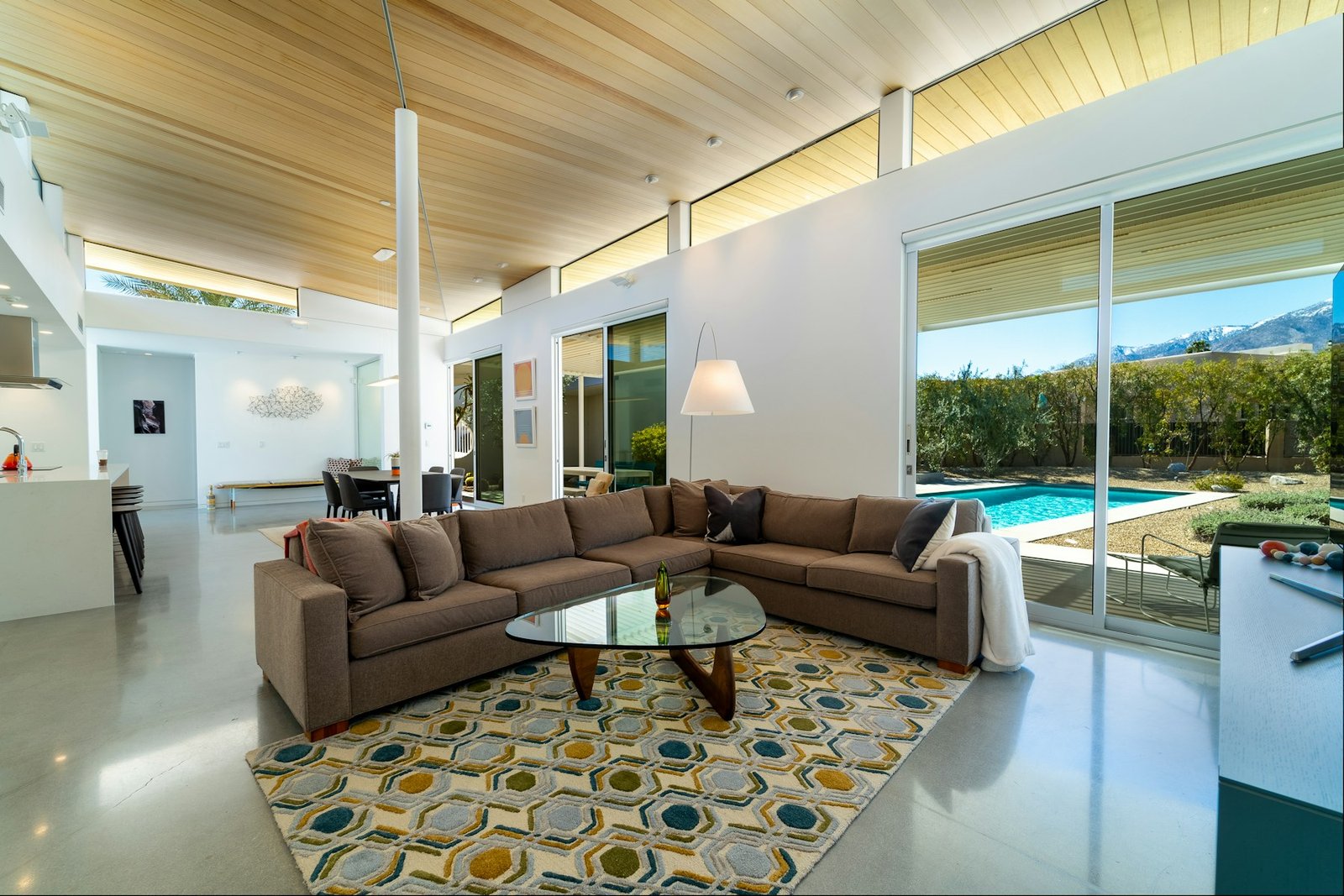
2. Put at least the front sofa legs on the rug
The front-legs-on layout is flexible because it visually joins the furniture without requiring the largest possible rug. The same rule should apply to nearby chairs when practical, so the pieces feel like part of one group.
If only the coffee table fits on the rug and there is a wide strip of floor before the sofa begins, the rug will usually look undersized.
3. Size up in a large room
Large rooms can visually swallow small rugs. A 9′ x 12′ or 10′ x 14′ rug may look more balanced when the seating group floats away from the walls or includes a sectional plus multiple chairs.
Before buying, mark the proposed corners with painter’s tape and walk around the room for a day. This makes it much easier to see whether the border of exposed flooring feels deliberate.
4. Use an 8′ x 10′ as a practical starting point
An 8′ x 10′ rug works in many average living rooms because it is large enough to reach beneath a sofa and a pair of chairs without taking over the entire floor. It is not a universal answer, but it is a useful scale to test first.
If you are already working with a compact layout, our small living room ideas show other ways to keep furniture and color from making the space feel crowded.
5. Match the rug orientation to the room
Place the long side of the rug parallel to the longest part of the seating arrangement. In a narrow living room, turning the rug the wrong way can exaggerate the room’s proportions and leave furniture hanging off the sides.
In square rooms, a square or nearly square rug can sometimes work better than forcing a standard rectangle.
6. Choose warm neutrals for a calm room
Oatmeal, camel, warm beige, mushroom and soft brown rugs are easy to combine with wood, cream upholstery and earthy paint colors. A neutral rug does not have to be plain: a high-low weave, subtle border or tonal pattern adds depth without creating a strong focal point.
This approach pairs naturally with our beige interior ideas and warm neutral decorating guide.
7. Use a vintage-style rug to make new furniture feel collected
A softly distressed Persian- or Turkish-inspired pattern can keep a room of newer furniture from feeling like it arrived all at once. Look for colors that repeat at least two tones already in the space, such as rust from a pillow and navy from artwork.
The goal is not perfect matching. A little variation gives the room more depth.
8. Bring in richer color through the rug
If the sofa and walls are neutral, the rug is a practical place to introduce olive, rust, blue, ochre or chocolate without repainting. Current 2026 rug coverage is leaning toward warmer earth tones and deeper, more natural palettes rather than cool gray. Homes & Gardens’ 2026 rug trend report also highlights texture, natural fibers and organic shapes.
For a darker palette, see how we balance saturated walls and warm furnishings in our brown living room ideas.
9. Try bold pattern in an otherwise simple room
A strong geometric, striped or abstract rug can be the main pattern in the room. Keep the largest upholstery pieces quieter, then echo one or two rug colors in smaller accents such as cushions, pottery or art.
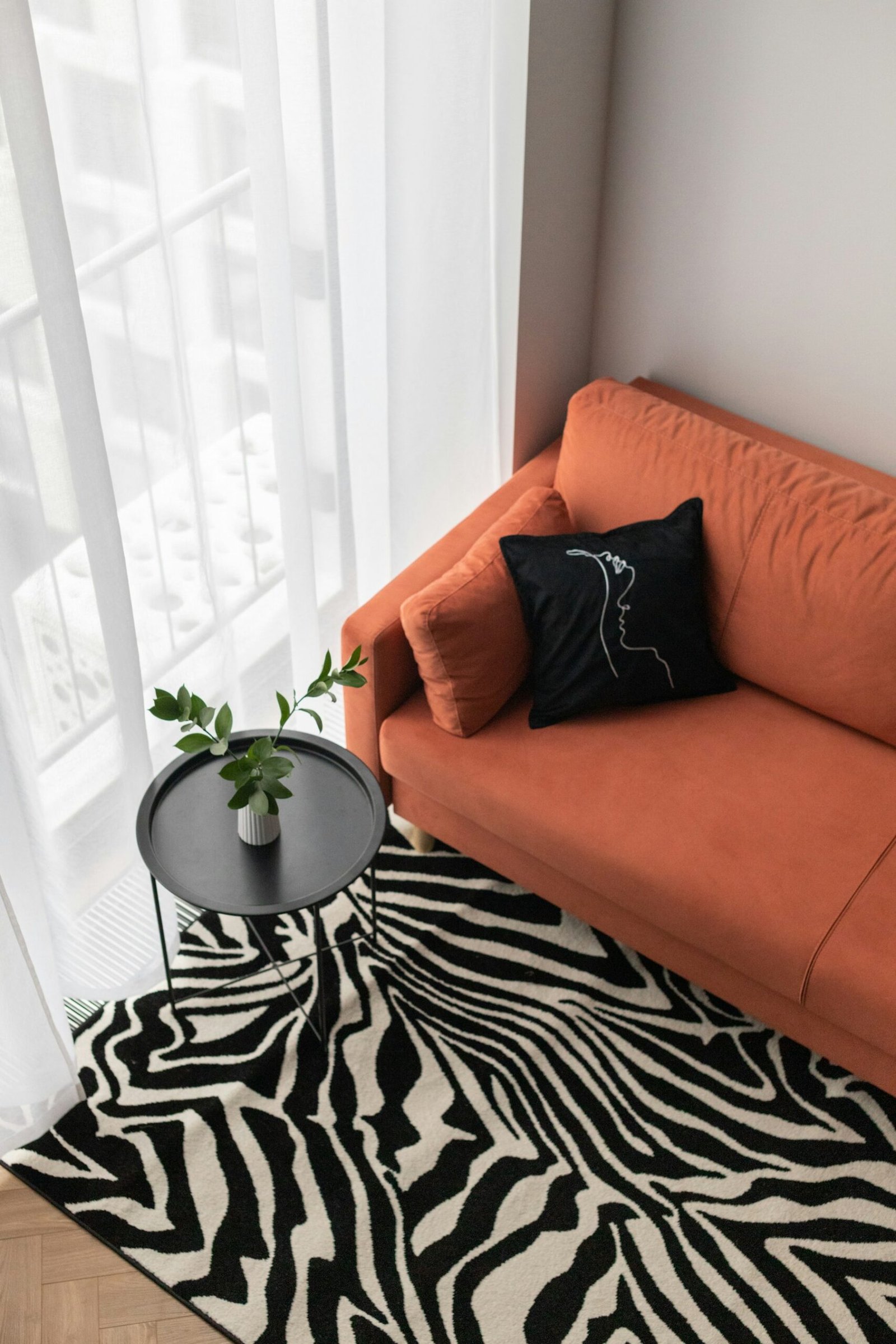
10. Use texture when you do not want more color
Chunky wool, loop pile, braided fibers and high-low construction can make a neutral room feel layered without adding another color family. This is useful in rooms where walls, artwork and furniture already carry enough visual interest.
If you like tactile interiors, our textured wall ideas show how to combine surface interest without making a room feel busy.
11. Choose wool for a durable, comfortable feel
Wool is popular in living rooms because it is resilient, soft underfoot and available in both flatweave and deeper-pile constructions. It can cost more upfront than many synthetic options, so the best choice depends on traffic, pets, stain concerns and budget.
Whatever the fiber, check the manufacturer’s cleaning guidance before treating spills so you do not damage dyes or finishes.
12. Use jute or sisal where you want dry, natural texture
Jute and sisal bring an organic look that works well with oak, rattan, linen and warm white walls. They are better suited to dry living spaces than damp rooms, and some natural-fiber rugs feel rougher under bare feet than wool.
A natural-fiber base can also work underneath a smaller patterned rug if you want more visual interest.
13. Layer a smaller rug over a larger neutral base
Layering solves two problems at once: the larger base establishes the correct scale, while the smaller top rug adds pattern or color. Keep the bottom rug relatively flat so the top layer sits securely.
This can be especially useful when you already own a beautiful vintage rug that is too small for the seating area.
14. Let an organic-shaped rug soften a boxy room
Oval, rounded and irregular rugs can break up a room dominated by rectangular sofas, windows and case goods. They work best when the shape has enough breathing room to be visible instead of disappearing under every piece of furniture.
In a small room, an irregular rug can also create a lighter visual footprint than a heavy dark rectangle.
15. Use the rug to balance a sectional
A sectional usually needs a rug large enough to relate to its full footprint, not just the coffee table in the middle. Place the front legs of both sides of the sectional on the rug, or go large enough for the entire sectional if the room allows.
Keep the rug centered on the seating zone rather than the room itself when the sectional is off-center.
16. Pick lower pile for high-traffic homes
Flatweaves and low-pile rugs are easier to vacuum and less likely to interfere with door clearances or rolling furniture. Deep pile can feel luxurious, but it is not always the most practical choice for homes with pets, frequent snacks, or constant foot traffic.
A rug pad underneath can improve comfort and help keep the rug from shifting.
17. Make a small apartment rug work harder
In a rental or compact apartment, one well-scaled rug can visually define the entire living zone. Instead of buying several tiny rugs, choose one larger piece that reaches the main sofa and chair arrangement.
Our apartment decor ideas include more renter-friendly ways to define zones without permanent changes.
18. Coordinate the rug with lighting, not just daylight
Colors can shift noticeably after sunset. Warm bulbs can make cream, rust and olive look richer, while cooler light can flatten some warm neutrals. Look at rug samples in both daytime and evening conditions before committing.
Our living room lighting ideas explain how layered warm light changes the way texture and color read after dark.
Common living room rug mistakes
Buying too small. A rug floating under only the coffee table can make the seating area feel disconnected.
Ignoring furniture placement. Rug size should follow the seating zone, not just the dimensions of the room.
Choosing delicate material for heavy traffic. Consider pets, kids, shoes and cleaning before choosing pile and fiber.
Matching every color exactly. Repeating a few tones is enough; exact matching can make the room feel overly coordinated.
Skipping a rug pad. Pads help reduce slipping and can make a thin rug feel more substantial.
Frequently asked questions about living room rugs
Should a living room rug go under the sofa?
Usually, yes. At minimum, placing the front sofa legs on the rug helps connect the seating group. In larger rooms, all furniture legs can sit on the rug.
Is a 5′ x 8′ rug too small for a living room?
It can work in a very small room, but in many average living rooms it is too small to reach the main furniture. An 8′ x 10′ is often a better starting point.
How much floor should show around a living room rug?
There is no single mandatory border, but leaving a visible and reasonably consistent strip of floor around the rug usually looks intentional. The amount depends on room size and furniture placement.
Can I put a rug over carpet?
Yes. A rug can define the seating zone and add pattern over wall-to-wall carpet. Use a pad designed for rug-on-carpet applications so the top rug is less likely to ripple or shift.
What rug color makes a living room look bigger?
Light and medium warm neutrals can keep visual contrast low, which may make a small room feel more open. Scale matters just as much: a rug that is too small can visually chop up the floor.
Where to start
Measure the seating area before you shop. Tape out an 8′ x 10′ or 9′ x 12′ footprint, check whether the sofa and chairs connect to it, then decide how much pattern and texture the room needs. Getting the size right first makes every other rug decision easier.
For more ways to build a cohesive living room, combine your rug plan with our living room lighting guide and browse the Rug Ideas category.