
18 Window Treatment Ideas That Balance Light, Privacy & Style
The best window treatment ideas balance three jobs at once: light control, privacy and the way the room feels. In 2026, the strongest looks are less about hiding the window and more about treating it as part of the architecture. Full-length drapery, Roman shades, woven materials, layered sheers and tailored café curtains are all showing up because they solve practical problems while adding softness and depth.
Start by deciding what the window actually needs. A street-facing bedroom may need privacy and blackout coverage; a sunny living room may need glare control without losing daylight; a rental may need a reversible solution. Once function is clear, choose fabric, color and mounting style.
Quick answer: what window treatments are in style now?
Current U.S. design coverage favors floor-to-ceiling drapery, layered sheers, Roman shades, café curtains, ripple-fold or tailored pleats, warm neutrals and natural-looking textiles. Architectural Digest highlighted layered drapery in July 2026 for the depth and flexibility it adds, while Good Housekeeping recently pointed to wall-matched drapery, café curtains and tailored headings as major 2026 directions.
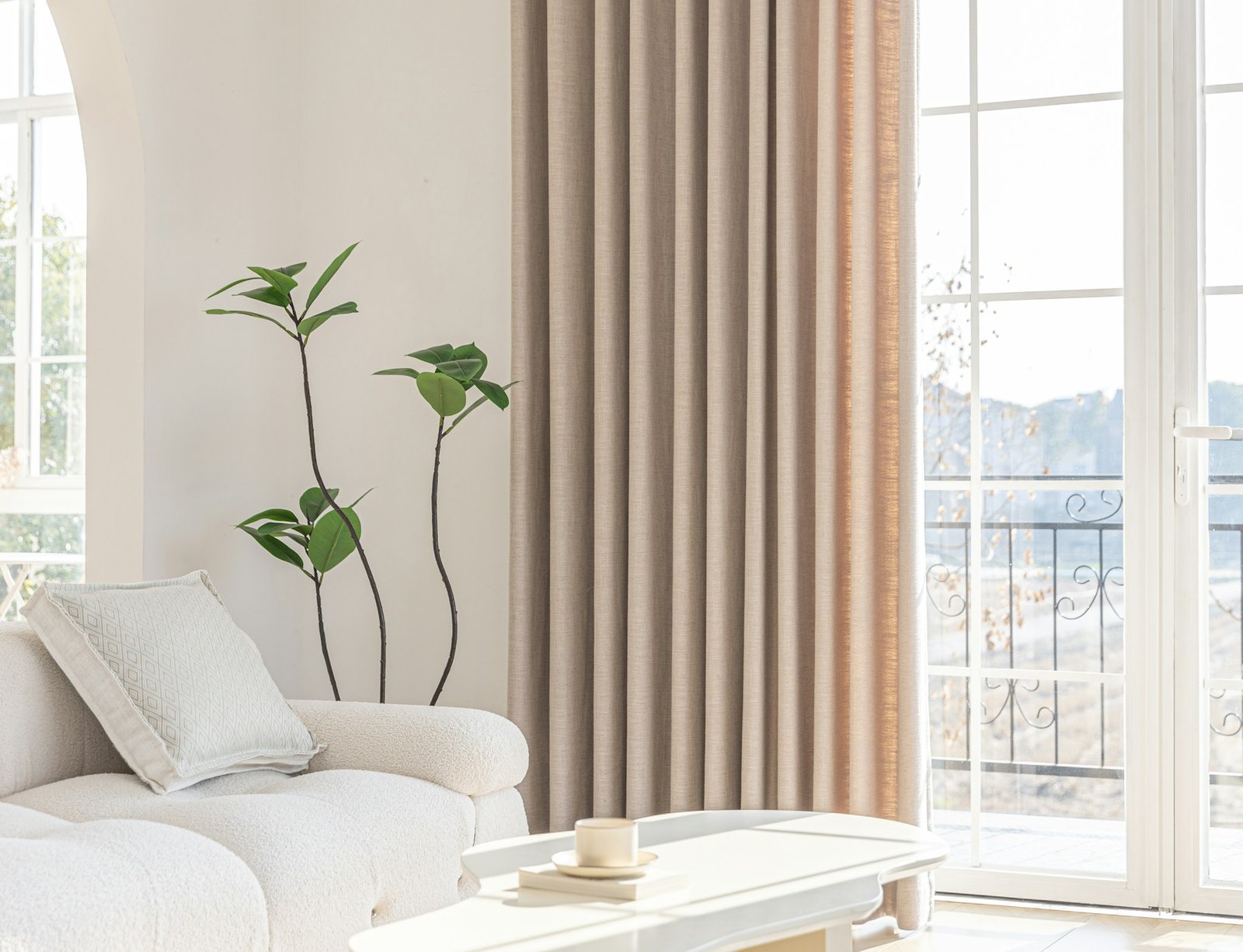
1. Hang curtains close to the ceiling
Mounting drapery higher than the top of the window helps the opening read taller and gives the fabric a more architectural presence. In many rooms, the rod or track can sit several inches above the window frame or close to the ceiling when proportions allow.
Let the panels reach the floor instead of stopping awkwardly above it. A clean break or slight kiss at the floor is easier to maintain than heavy puddling in everyday spaces.
2. Extend the rod beyond the window frame
A wider rod allows curtain panels to stack mostly beside the glass when open, preserving daylight and making the window appear broader. This is especially useful when the window itself is modest but the wall has room on both sides.
Check for switches, sconces, built-ins and vents before choosing the final rod width.
3. Layer sheers with heavier drapery
Layering a sheer inner treatment with lined outer drapery gives you more control throughout the day. Sheers soften harsh daylight and provide some daytime screening, while heavier panels can close for evening privacy.
The combination is particularly effective in living rooms and bedrooms because it adds depth without taking floor space. Keep the layers tonally related—warm white with oatmeal, for example—if you want a quieter look.
4. Use Roman shades when curtains feel too bulky
Roman shades bring fabric softness without requiring wall space for side panels. They work well over kitchen windows, desks, banquettes and smaller bedrooms where long curtains would interfere with furniture.
A flat Roman shade feels cleaner and more modern; a softer fold can suit traditional or relaxed interiors. Patterned Roman shades can also act like a framed textile when the rest of the room is restrained.
5. Pair woven shades with simple curtains
Woven shades add texture and a warm natural note, while curtain panels soften the frame around them. The combination works especially well with wood furniture, warm white walls and earthy colors.
If you like tactile rooms, this pairing connects naturally with the material ideas in our textured wall guide without making every surface visually busy.
6. Try café curtains for privacy without losing daylight
Café curtains cover the lower portion of a window while leaving the upper glass exposed. They are useful in kitchens, breakfast nooks and street-facing rooms where you want privacy at eye level but still want natural light from above.
Choose linen or cotton for a casual look, and keep the rod proportionate to the small treatment rather than using oversized hardware.
7. Match curtains closely to the wall color
When drapery is close in color to the walls, the window treatment can feel integrated instead of visually interrupting the room. This works particularly well in beige, cream, mushroom, olive and other muted palettes.
For a tonal room, vary texture rather than contrast. A slightly nubby linen curtain against smooth painted walls adds depth while keeping the palette calm. See our warm neutral decor ideas for more ways to layer similar tones.
8. Use contrast drapery when the window should be a focal point
Deep brown, rust, olive, navy or burgundy panels can frame a window like an architectural outline. This is most effective when the room already repeats the curtain color elsewhere in a rug, artwork or upholstery.
In a brown living room, for example, dark cocoa drapery can feel rich rather than heavy when balanced with lighter upholstery and warm lamps. Our brown living room ideas show how to keep deeper tones from flattening the space.
9. Choose blackout lining for bedrooms, not just dark fabric
Fabric color alone does not determine how much light reaches the room. A pale curtain with proper blackout lining can block more light than an unlined dark panel.
For bedrooms, look at the full assembly: fabric, lining, gaps around the window, mounting position and any light leaking above or at the sides. Layering a shade under drapery can improve coverage when darkness matters.
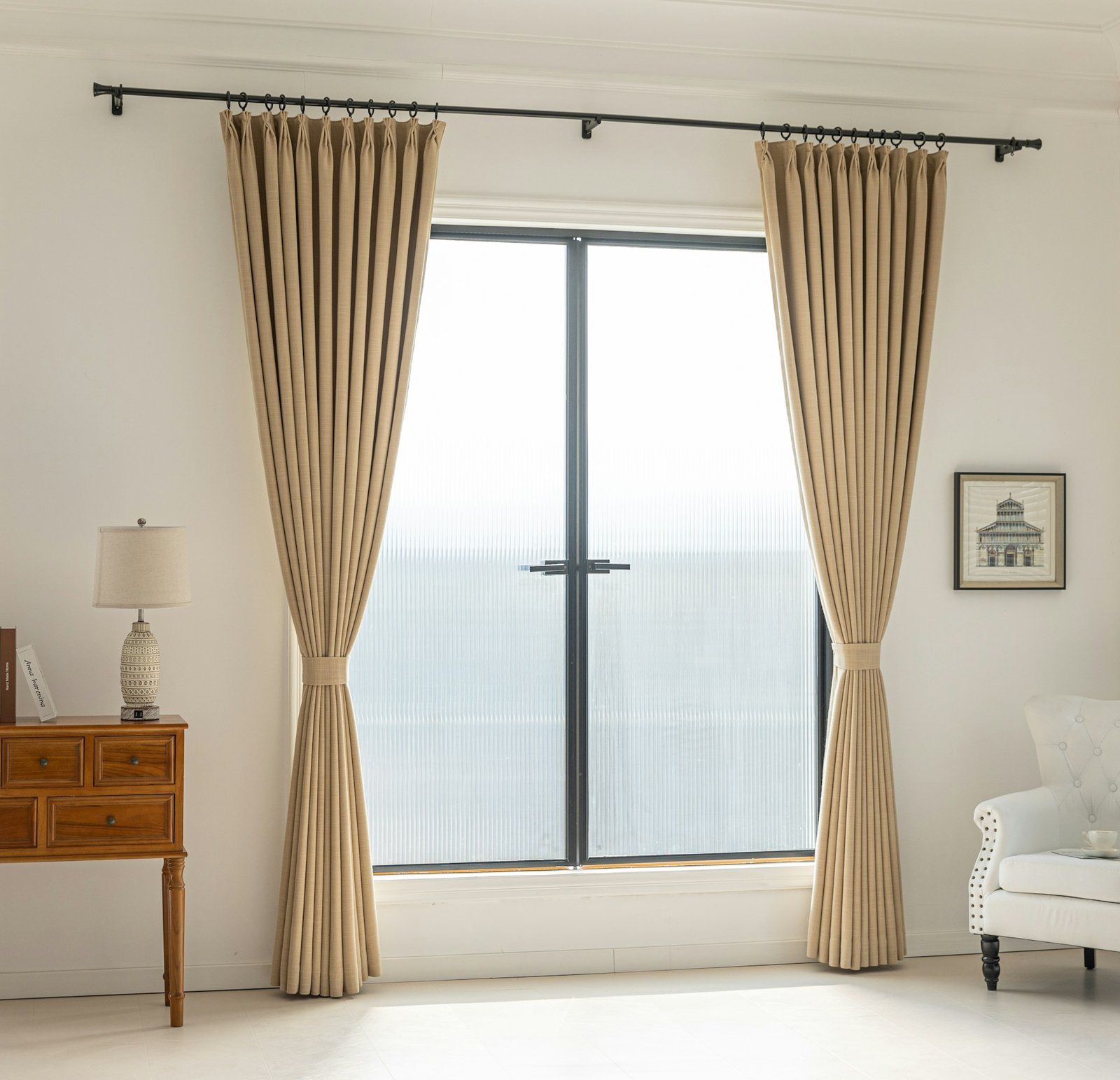
10. Use patterned curtains as the room’s main print
Patterned drapery covers a large vertical surface, so it can establish the room’s palette quickly. If the curtains are floral, striped or geometric, keep at least one large furniture piece relatively quiet so the window remains the visual lead.
For more adventurous rooms, use the same color thread in rugs and pillows rather than repeating the exact print everywhere. Our pattern drenching guide explains how scale and repetition keep mixed prints controlled.
11. Use ripple-fold or tailored pleats for a cleaner look
Heading style changes the entire personality of drapery. Ripple-fold curtains create even, continuous waves and pair well with ceiling tracks, while tailored pinch pleats feel more structured and traditional.
If the room already has strong texture, simple headings usually work best. Decorative headings and trim make more sense when the surrounding surfaces are quieter.
12. Let curtains soften a large open-plan room
Big windows in open living areas can make a room feel hard if most surfaces are glass, wood, stone and drywall. Generous fabric at the windows adds acoustic and visual softness and can help the seating zone feel more finished.
Coordinate the drapery with the rug and lamps rather than matching the sofa exactly. Our living room rug ideas can help establish the room’s lower visual anchor before you choose the window fabric.
13. Choose short treatments only when the room requires them
Full-length curtains are not automatically better. If a radiator, built-in bench, kitchen counter or desk sits directly under the window, a Roman shade, café curtain or intentionally short panel may be more functional.
The key is making the shortened treatment look deliberate. Avoid panels that stop at a random height with no relationship to the furniture below.
14. Use window treatments to control screen glare
In a home office or TV room, adjustable light control matters more than decorative fullness. Solar shades, light-filtering rollers, Roman shades or layered sheers can reduce direct glare while preserving some daylight.
Positioning lamps correctly matters too. Our living room lighting guide explains how to combine daylight with ambient, task and accent light after sunset.
15. Make rental-friendly treatments feel intentional
Renters can still improve windows without permanent construction. Tension rods, compression systems, removable hooks designed for appropriate loads, and correctly sized ready-made panels can make a significant difference.
Keep the original blinds when required by the lease and layer curtains in front of them rather than removing fixtures. For more reversible upgrades, see our apartment decor ideas.
16. Use warm neutrals instead of default bright white
Bright white curtains can look sharp in a crisp room, but they are not the only neutral. Oatmeal, flax, cream, mushroom and light taupe often integrate more naturally with warm wood, aged brass and earthy upholstery.
17. Consider motorized shades for hard-to-reach windows
Motorized treatments can make sense on tall windows, behind deep furniture or anywhere daily access is awkward. They are most useful when convenience solves a real problem rather than simply adding technology.
Plan power, controls and service access before installation. For new construction or major renovations, decide on motorization before walls and trim are complete whenever possible.
18. Prioritize cordless designs around young children
Window-covering cords can create a serious strangulation hazard. The U.S. Consumer Product Safety Commission says the safest option in homes with young children is to use cordless window coverings. Keep cribs, beds, furniture and toys away from window cords as an additional precaution.
This is one area where safety should override a preferred decorative detail. Choose a treatment that meets the room’s needs without introducing accessible operating cords.
How to choose the right window treatment
| Need | Good starting point | Why it works |
|---|---|---|
| Daytime privacy | Sheers, café curtains or light-filtering shade | Reduces visibility while keeping some daylight |
| Bedroom darkness | Blackout-lined drapery plus shade | Uses layers to reduce light gaps |
| Small room | Roman or roller shade | Does not need side-wall stacking space |
| Warm, layered look | Woven shade plus curtain panels | Combines texture with softness |
| Rental | Existing blind plus removable curtain system | Adds style without removing permanent fixtures |
| Hard-to-reach window | Motorized cordless shade | Improves everyday control and access |
Common window treatment mistakes
- Choosing fabric before deciding how much privacy or light control the room needs.
- Hanging a rod too narrowly so open curtains still cover much of the glass.
- Using panels that are too short for a floor-length look.
- Assuming dark fabric automatically provides blackout performance.
- Ignoring radiators, vents, desks or built-ins below the window.
- Adding too many competing patterns around a large printed curtain.
- Using accessible operating cords where young children are present.
Frequently asked questions
Should curtains touch the floor?
For full-length drapery, panels usually look most intentional when they just touch the floor or have a very slight break. Shorter curtains are better reserved for windows where furniture, counters or radiators make full length impractical.
Are blinds or curtains better for a small room?
Shades and blinds use less wall space and can be easier around furniture, while curtains add softness and can make a window feel larger. In a small room, a Roman shade alone or a slim shade layered with narrow side panels often gives the best balance.
What is the best window treatment for privacy and natural light?
Sheers, light-filtering shades and café curtains can all provide partial daytime privacy while allowing light through. For nighttime privacy, add an opaque second layer such as lined curtains or a privacy shade.
Can you mix blinds and curtains?
Yes. Layering a shade or blind under curtains is one of the most practical combinations because each layer can perform a different job. Use a simple blind or woven shade under fuller curtains so the window does not become visually overloaded.
What color curtains make a room look bigger?
Curtains close to the wall color can reduce visual breaks and make the room feel more continuous. Hanging them high and wide usually has more impact on perceived window size than choosing one specific pale color.
Image credits: EZcurtain Life via Unsplash, used under the Unsplash License.